
By AI Landscape Design Team · Editorial policy
Tropical garden vs Mediterranean garden: Which Fits Your Yard?
Choose tropical garden character for layered, bold foliage and a sheltered, lush atmosphere; choose Mediterranean character for a sunnier composition of restrained planting, useful shade, and warm material textures. The visual labels do not establish climate suitability or water demand. Adapt the forms to your actual site instead of importing an entire plant palette from another region.
Published · 6 min read
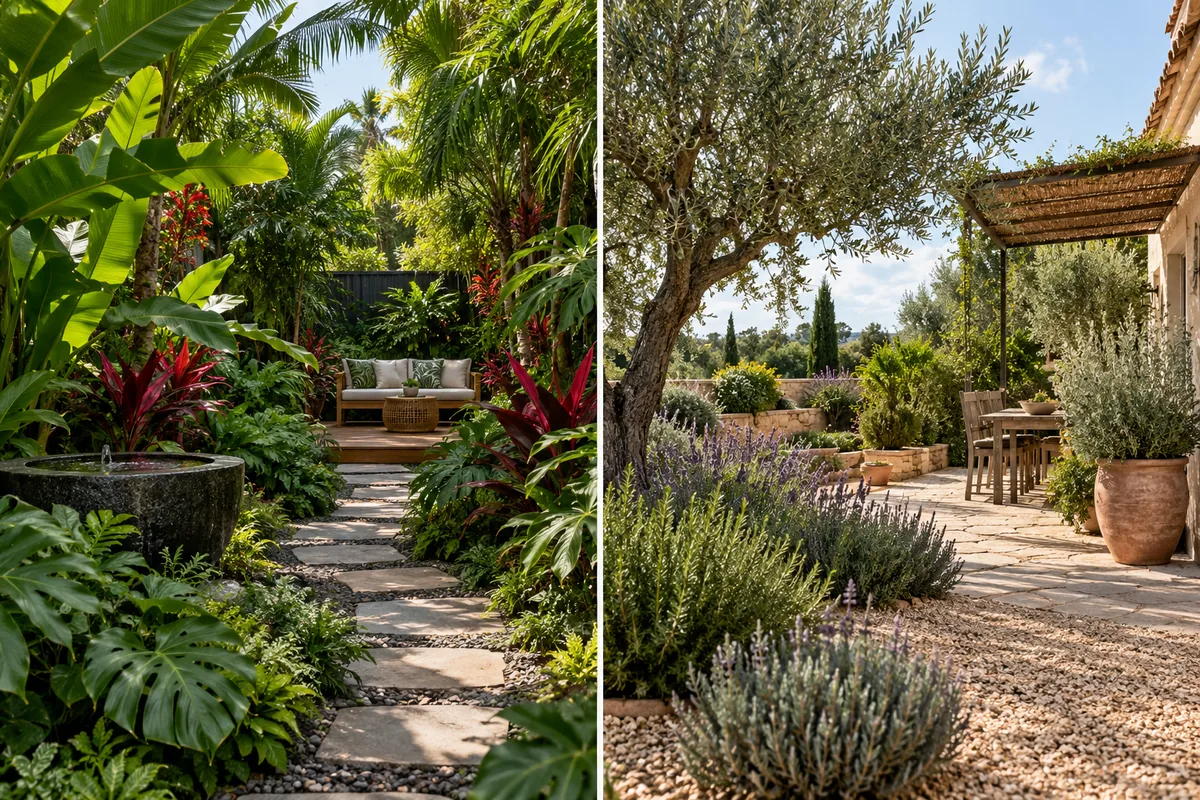
Key takeaways
- Atmosphere: Layered bold foliage enclosure; Sunny open terrace character.
- Plant texture: Large overlapping leaf forms; Restrained groups and visible spaces.
- Materials: Quiet backdrop for foliage; Warm paving and container textures.
| Dimension | Tropical garden | Mediterranean garden |
|---|---|---|
| Atmosphere | Layered bold foliage enclosure | Sunny open terrace character |
| Plant texture | Large overlapping leaf forms | Restrained groups and visible spaces |
| Materials | Quiet backdrop for foliage | Warm paving and container textures |
| Water demand | Depends on verified selections | Depends on verified selections |
| Winter care | May involve tender plant protection | Depends on regional conditions |
| Hybrid option | Sheltered foliage boundary | Simple terrace with useful shade |
What experience should the garden create?
Tropical garden inspiration often emphasizes overlapping foliage, strong leaf shapes, and a sense of enclosure. Mediterranean inspiration can organize a sunny terrace around shade, planting texture, and the relationship between outdoor seating and the house. These are composition choices rather than rigid formulas. Decide whether the sitting area should feel wrapped in planting or open toward a bright courtyard. Then mark the views and access routes that need to remain clear. A dense foreground may feel protective from one seat but block the useful outlook from a window. Compare the proposed layers from the normal living positions instead of judging only a dramatic close view of leaves or pottery.
How does climate alter the choice?
A tropical reference may contain foliage that cannot remain outdoors through your winter, while a Mediterranean reference may assume conditions unlike a humid or poorly drained site. According to the Royal Horticultural Society, Mediterranean garden inspiration draws on vegetation from hot, dry regions around the Mediterranean. That origin explains the reference without proving that a particular plant will succeed elsewhere. Check USDA hardiness zone, local rainfall, soil drainage, wind, and light before building a planting list. If overwintering containers is necessary, include the storage and moving work in the brief. Choosing a similar shape from a locally appropriate plant may be more sensible than maintaining a difficult imported specimen.
Where should foliage do the visual work?
For tropical character, assign foliage layers distinct jobs: a taller background, a middle layer that gives texture near seating, and a lower edge that leaves the route legible. Large leaves can dominate a compact area, so inspect mature size rather than buying by pot size. For Mediterranean character, allow paving and open space to remain visible between planting groups instead of filling every gap. Neither scheme needs a nationwide species list. Screen each proposed plant for regional invasive status and site fit. Keep sharp or thorny foliage away from where people carry trays or pass in the dark. Leaf character should support the intended movement, not make the terrace difficult to use.
How should paving and containers differ?
A tropical-inspired layout may work with quieter paving that lets foliage carry the scene, while containers can introduce selected vertical accents. A Mediterranean-inspired terrace can give warm stone, simple paving, or terracotta-like textures a stronger role. These are options, not cultural requirements. Lay samples beside the existing house exterior and evaluate heat, glare, wet appearance, and cleaning access. Avoid collecting every reference material in the same small space. Containers require drainage and manageable weight, and large specimens may be difficult to move when weather changes. Check the practical handling plan before choosing a pot for its scale in a concept image.
What can be said honestly about watering?
Do not assume that tropical always means excessive irrigation or that Mediterranean means no irrigation. Actual demand comes from plant choices, climate, establishment, and management. Group planting according to locally confirmed needs, and examine whether existing irrigation wets the paving or serves incompatible zones. According to EPA WaterSense, a water-smart landscape combines appropriate planting with thoughtful irrigation and maintenance. A sheltered border receiving roof runoff behaves differently from a container beneath an overhang. Record those differences before setting expectations. A visual comparison can show foliage density, but it cannot determine a safe watering interval or identify whether soil stays too wet around particular roots.
Which care routine fits your household?
Tropical character can involve removing damaged leaves, managing container growth, and protecting tender planting where local weather requires it. Mediterranean character can involve seasonal pruning, inspecting dry-looking planting, and keeping terrace surfaces clean. Compare the actual tasks rather than assigning one style a universal maintenance score. A collection of containers can demand more attention than a planted border because each vessel behaves separately. Leave hose access and enough room to work around the planting. Consider what the garden looks like outside its most photogenic season. A scheme that needs frequent rearrangement may be enjoyable for an active gardener but unsuitable for someone wanting a consistent outdoor sitting area.
Can one terrace borrow from both?
Combine the two through a clear arrangement rather than alternating incompatible plant needs throughout one irrigation zone. A simple sunny terrace might use warm paving and shade overhead, with a sheltered foliage group forming one boundary. Keep the transition deliberate and verify that each plant belongs in the relevant conditions. Attached shade structures, electrical lighting, and altered drainage need review by licensed local professionals; contact 811 before excavation in the United States. For gardens used by pets, assess the ASPCA toxicity list independently of style. The mixture should improve comfort and use, not just increase the number of decorative objects or plant types in the picture.
What should the comparison images keep constant?
Keep furniture, door access, existing trees, and the principal viewing position the same while changing planting texture and material emphasis. Otherwise a lush version with better shade may win for a reason unrelated to tropical style. AILandscape can help explore visual alternatives from a yard photo, while plants, irrigation, drainage, and construction require local confirmation. Treat the preferred image as a brief for further questions. If it shows a plant you cannot identify or a support that appears to float, remove that assumption from the implementation plan. Choose the arrangement that remains useful when its seasonal care, site exposure, and real construction requirements are considered.
Frequently asked questions
Can tropical character work in a cold-winter garden?
It may be possible through locally hardy foliage forms or seasonal containers, but the plant choices and winter care must be assessed locally. Do not assume a tropical-looking plant will survive outdoors. Include storage, transport, and replacement work when comparing the options.
Are Mediterranean gardens always drought-tolerant?
The name alone does not establish drought tolerance. Verify the particular plants, soil, climate, and establishment needs. A terrace with Mediterranean materials can still have unsuitable high-demand planting or inefficient irrigation, so evaluate the water plan separately from appearance.
Can I use large leaves with terracotta containers?
Yes, where the plants and containers fit the conditions and daily use. Give the combination a clear purpose, such as screening a sheltered seat. Check mature spread, drainage, container weight, and handling access before choosing it because the textures look appealing together.
Sources
Related reading
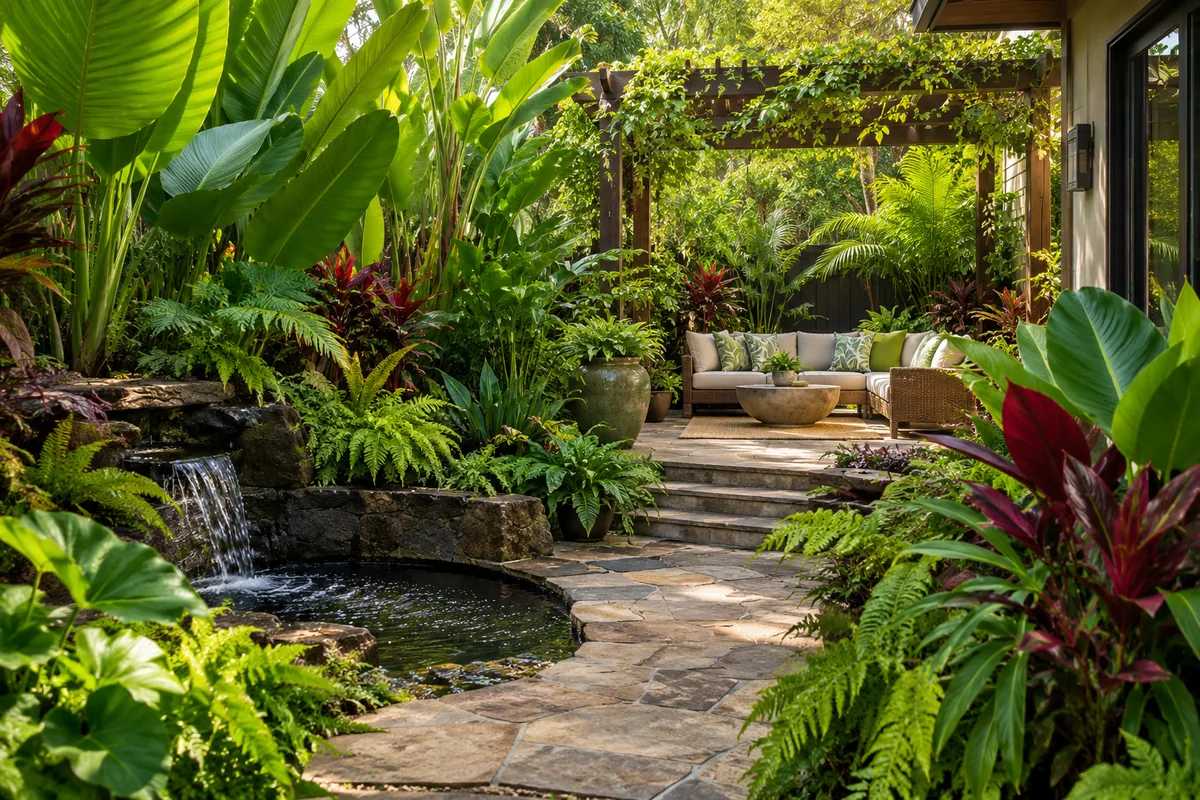
Tropical landscape style: foliage, layers, and shelter
Explore tropical landscape style using large leaves, layered greenery, sheltered seating, and container strategies adapted to local weather and care routines.
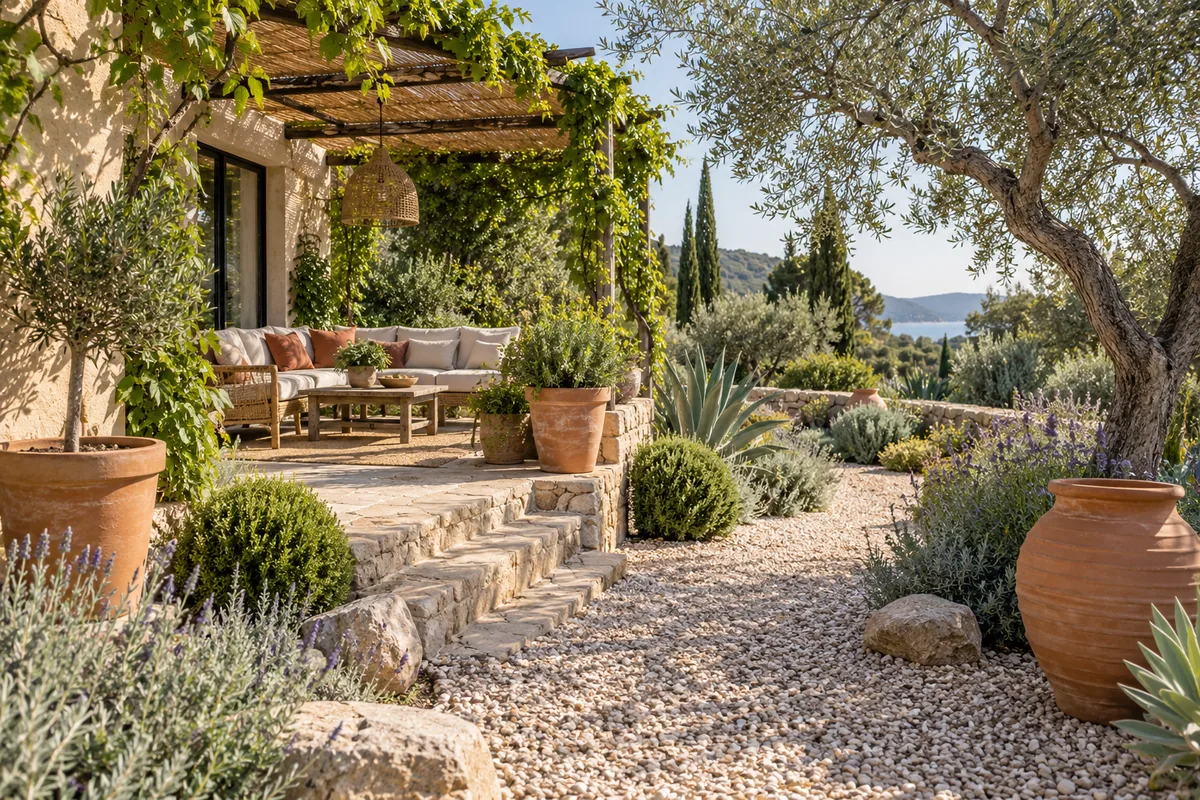
Mediterranean garden style: shade, gravel, and warm color
Understand Mediterranean garden style through shade, gravel, clay pots, and silver foliage, with practical ways to adapt the visual language to local climates.
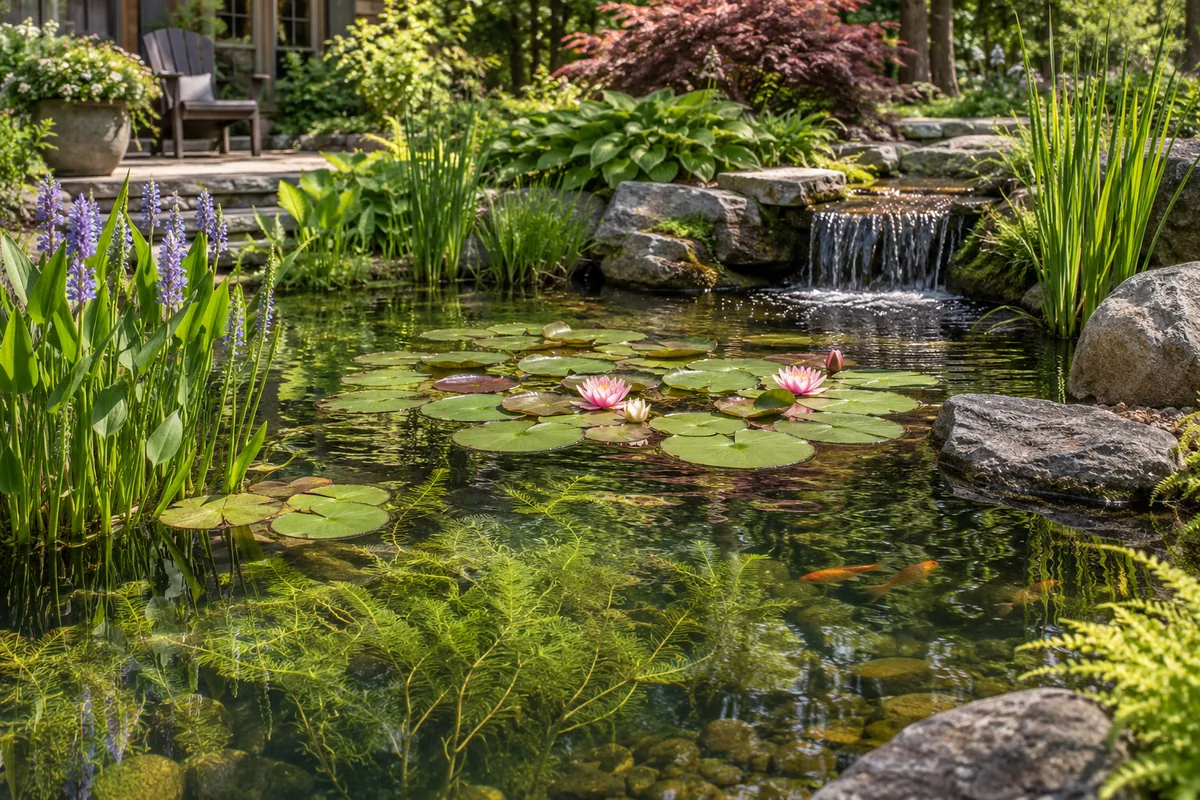
Pond Plants Selected for Roles and Local Conditions
Learn how pond plants fit your yard, with practical material, placement, upkeep, and safety questions to review before choosing a visual direction.