
By AI Landscape Design Team · Editorial policy
DIY landscaping vs Professional landscaping: Which Fits Your Yard?
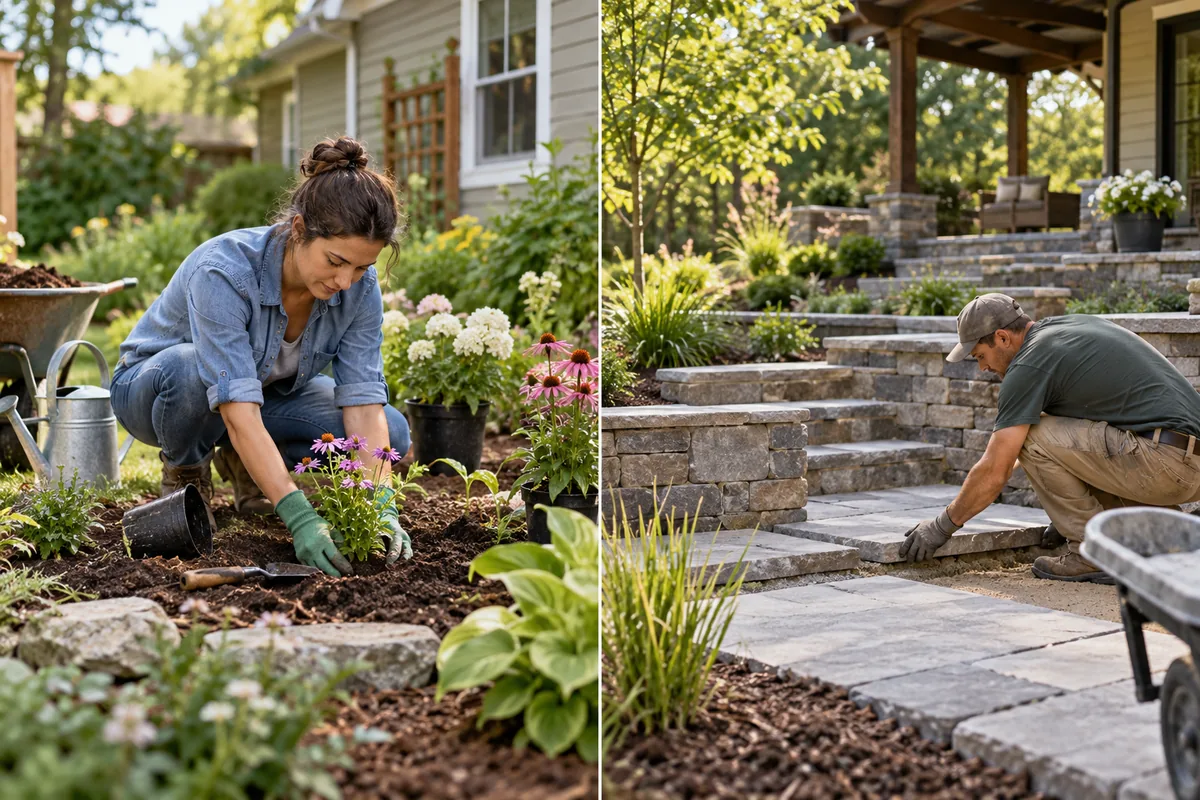
Choose DIY landscaping for manageable planting and maintenance tasks you can perform safely with suitable knowledge and tools; choose qualified professionals for work involving structures, significant grading, drainage, electrical systems, gas, or other regulated tasks. A mixed approach is often sensible. Divide the project by responsibility and risk rather than treating the entire yard as one all-or-nothing job.
Published · 6 min read
Key takeaways
- Scope: Manageable suitable household tasks; Technical regulated or complex work.
- Cost drivers: Tools transport time and corrections; Labor coordination and specialist services.
- Scheduling: Depends on household capacity; Depends on agreed sequence and conditions.
| Dimension | DIY landscaping | Professional landscaping |
|---|---|---|
| Scope | Manageable suitable household tasks | Technical regulated or complex work |
| Cost drivers | Tools transport time and corrections | Labor coordination and specialist services |
| Scheduling | Depends on household capacity | Depends on agreed sequence and conditions |
| Quality check | Knowledge appropriate to the task | Defined scope and relevant standards |
| Excavation | Utility and site review still needed | Utility and site review still needed |
| Best combination | Planting after agreed preparation | Critical technical stages with clear boundaries |
Which tasks are reasonable starting points?
A contained planting refresh, routine weeding, or rearranging suitable movable containers may offer a practical DIY starting point when the site and personal capabilities support it. Begin with the condition you understand rather than the feature that looks most dramatic online. Check soil, light, mature plant size, USDA hardiness zone, and local invasive guidance before buying planting. If the bed is near utilities, structures, or drainage features, the work may involve more than gardening. Record what is changing and what must stay intact. A small scope gives you a chance to understand the tasks and care requirements without committing the whole property to a project that exceeds the available time or experience.
What should trigger professional involvement?
Retaining walls, major grading, altered drainage, structural supports, electrical installations, and gas connections require appropriate licensed local expertise. Do not infer suitability for DIY from the apparent size of a feature in a picture. A short wall can still have site-specific demands, and a small lighting project can still involve hazardous systems. Ask what permits, surveys, or specialist design are required before materials are ordered. The professional role may concern assessment and design as well as installation. If you cannot explain the critical questions a feature raises, pause the implementation decision and obtain advice. Visual simplicity is not a reliable measure of technical complexity or safety.
How should excavation be approached?
Before digging in the United States, contact 811 and follow the local utility marking process. Ask about private utilities that may need separate locating, and do not treat an old photograph or remembered cable route as sufficient information. Locating marks do not settle every issue about roots, foundations, drainage, or safe excavation practice. Have qualified local professionals assess conflicts relevant to the work. A planting hole and a new patio base both disturb ground, although their consequences differ. Keep the excavation decision separate from choosing a style. A homeowner can participate in planning while leaving ground-disturbing tasks to the appropriate professional when conditions or scope warrant it.
Does DIY necessarily reduce total cost?
DIY can reduce some purchased labor, but the comparison must include tools, material transport, disposal, preparation, time, and correction of mistakes. Buying a small quantity of a specialist material may also involve handling costs that a simple online unit price does not show. Professional work can include organization and equipment access that a homeowner would otherwise need to arrange. Request quotes for a defined scope and compare what each includes. Avoid ranking options by installation price alone if their preparation and responsibilities differ. No exact cost should be inferred from a photo. A smaller, competently completed project can be more useful than an ambitious bargain whose unfinished ground disrupts daily access.
What is the household time commitment?
Divide the work into preparation, implementation, cleanup, and establishment care. A weekend planting task can lead to months of watering and observation; a path project can block a useful route while materials wait for completion. Identify when the area must remain accessible and where tools can be stored securely. Be realistic about lifting and repetitive work, and use appropriate help rather than treating fatigue as evidence that the project is nearly finished. Professional scheduling also requires coordination and may depend on weather or approvals. Discuss those dependencies early. The practical comparison is whether the entire sequence can be managed, not whether the visible part of the work looks achievable in a short tutorial.
Can the responsibilities be split?
Yes, but agree on the interfaces before work starts. A professional may establish technical site conditions or complete a hardscape area while the homeowner undertakes appropriate planting afterward. Clarify when each stage is ready, who protects finished work, and whether homeowner activity affects warranties or the professional's responsibility. Do not assume that an installer will repair a homeowner-prepared base or accept an unverified foundation. Give each person a written account of the work being relied on. Splitting tasks by clear boundaries can preserve a useful DIY role without asking a professional to take responsibility for decisions they did not inspect or approve.
How should quality be evaluated?
For planting, inspect condition, suitable placement, and access for ongoing care rather than only the immediate fullness of a border. For built features, use the specifications and assessments appropriate to the project; appearance alone cannot demonstrate stability, drainage, or compliance. Ask professionals how completion will be reviewed and what issues should be reported afterward. Keep records of decisions and products so later repairs do not depend on memory. Where pets use the space, verify relevant plants against the ASPCA toxicity list and review loose materials, sharp edges, and access separately. A finished-looking yard can still carry unresolved use or safety questions that were hidden during the busiest stage of work.
What can a concept image contribute?
A concept can help rank visual preferences and explain which existing features should remain. It cannot identify the safe division of construction responsibility. AILandscape offers exploratory yard images; confirm plants, drainage, and implementation requirements with appropriate local professionals. Use the concept beside a phased task list that identifies DIY opportunities and professional checkpoints. If the attractive part of the image depends on a wall, altered grade, or new utilities, obtain that assessment before committing to the surrounding decorative work. Choosing professional help for one critical task does not mean losing control of the design; it can allow the rest of the project to proceed with clearer assumptions and less avoidable rework.
Frequently asked questions
Can I plant my own garden after a contractor builds the patio?
Often, a split project can work if responsibilities and timing are agreed in advance. Confirm access, protection of finished surfaces, planting-area conditions, and any warranty implications. Do not assume the contractor will accept or repair homeowner work outside the contracted scope.
Are small retaining walls appropriate DIY projects?
Size alone does not establish suitability. Loads, ground conditions, drainage, nearby structures, and local requirements can affect even a modest wall. Have an appropriate licensed local professional assess the proposal before deciding how it should be designed and built.
What should I do before any digging?
In the United States, contact 811 and follow the local marking process, including questions about separately locating private services. Also assess roots, structures, and water movement relevant to the task. Utility contact is an essential step, not a complete construction assessment.
Sources
Related reading
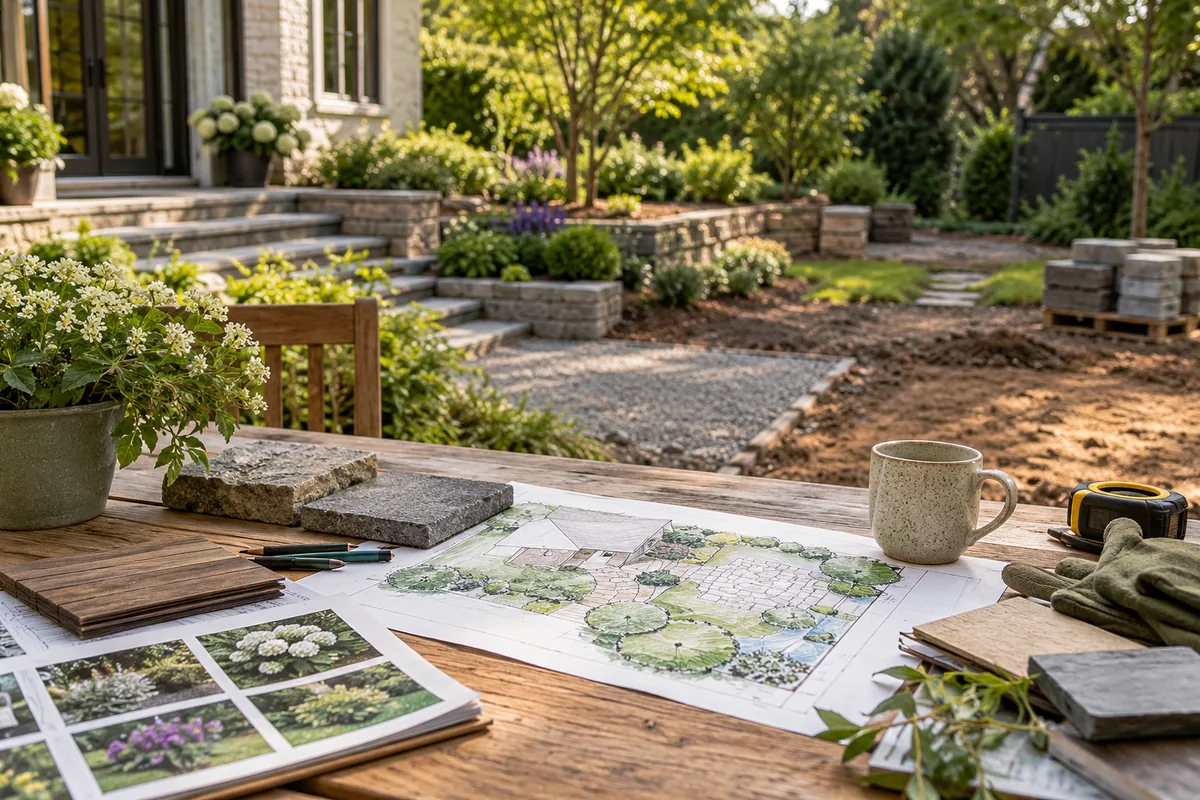
How to Phase a Landscaping Project Without Rework
Phase a landscaping project with site investigations, service coordination, access, and planting timing to avoid unnecessary disruption of completed work.
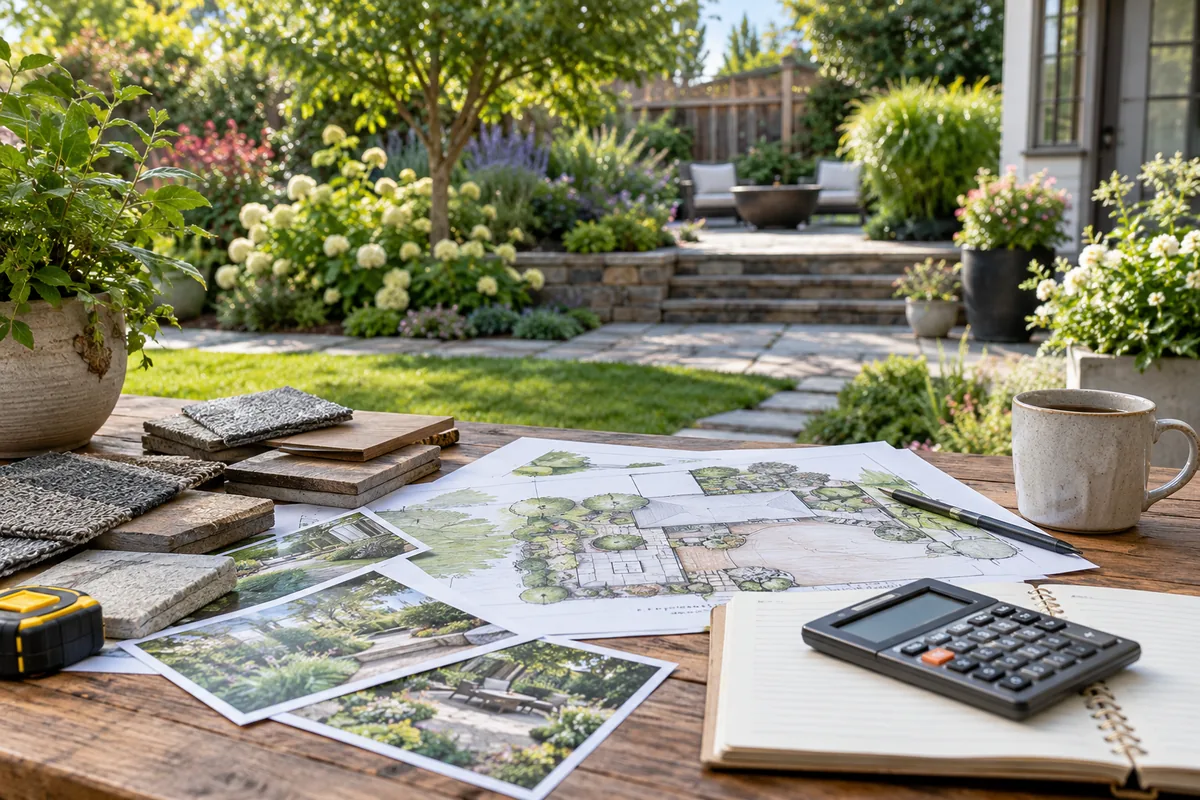
How to Set a Landscaping Budget Without Guessing Costs
Set a landscaping budget with a defined scope, separate cost categories, clear unknowns, and practical phases before comparing quotes for the actual project.
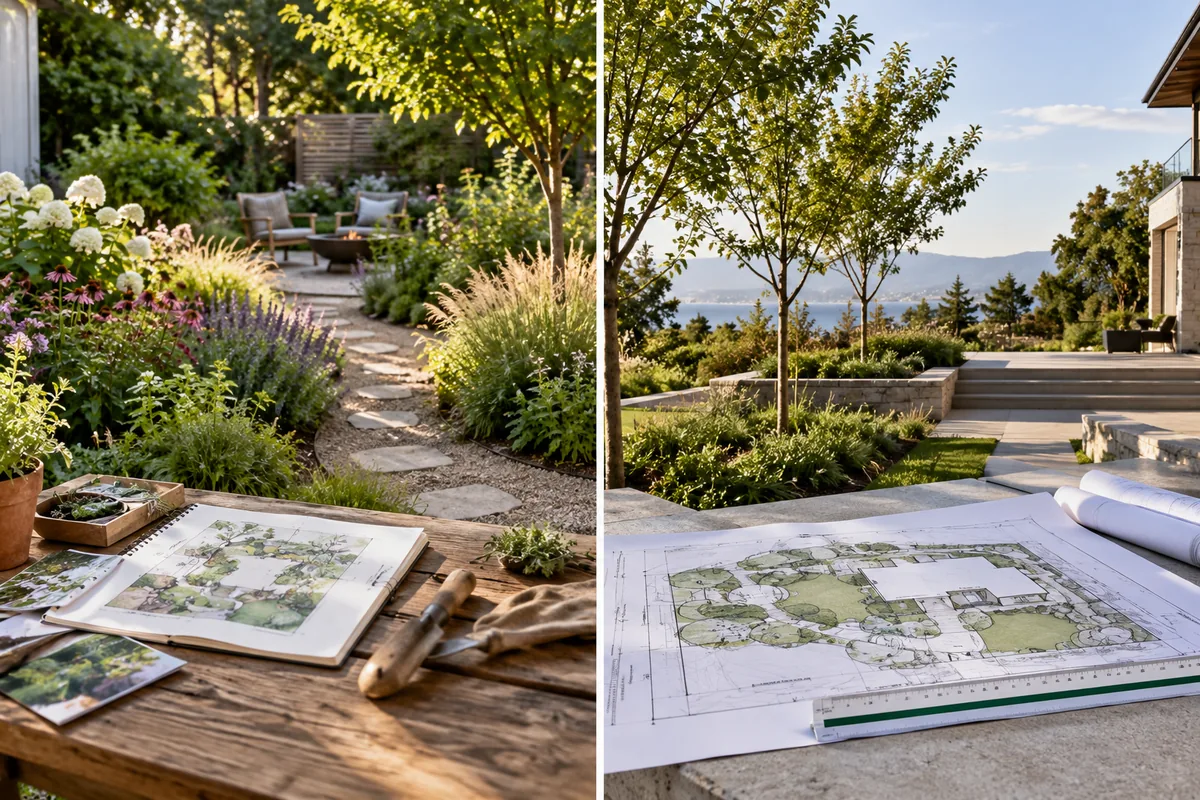
Landscape designer vs Landscape architect: Which Fits Your Yard?
Compare landscape designer and landscape architect for your yard. Review layout, materials, upkeep, and practical trade-offs before choosing a direction.