
AI Landscape Design 团队撰写 · 编辑方针
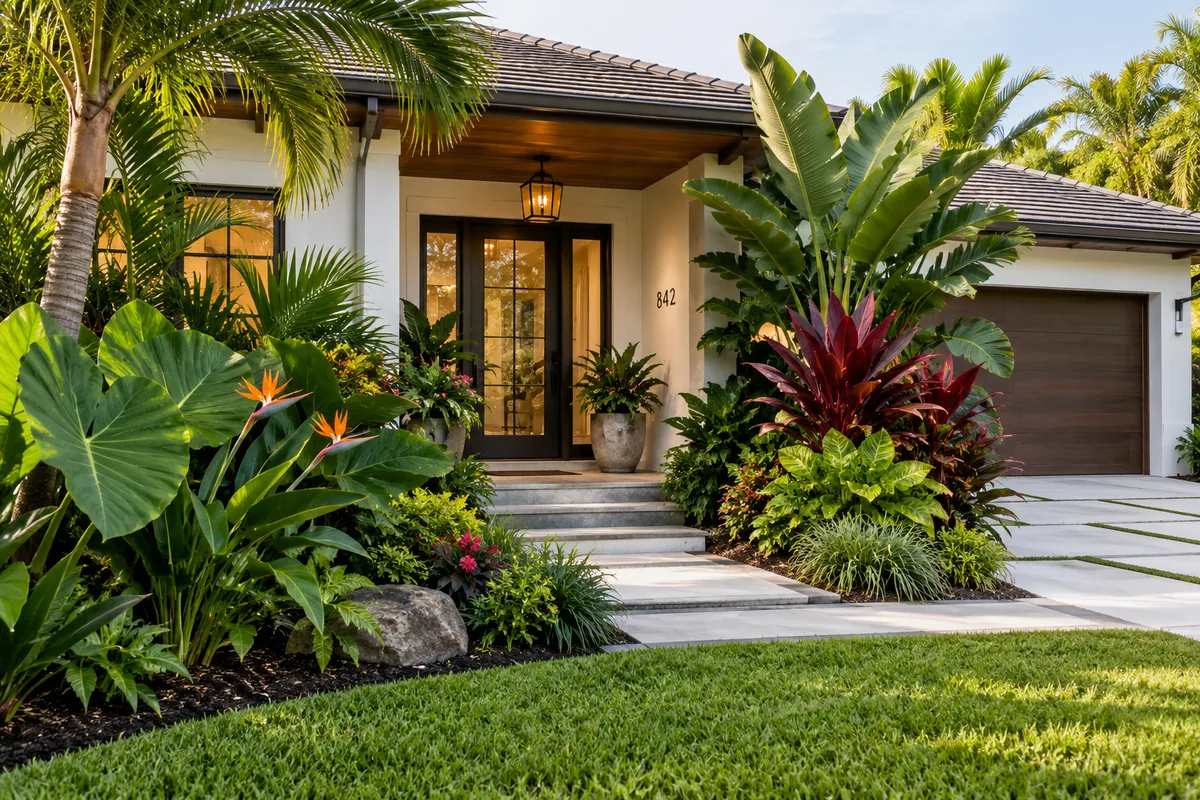
Tropical front yard ideas for bold foliage and open sightlines
Tropical front yard ideas need bold foliage without losing the door, house number, or driveway view. Arrange large-leaved visual roles around a clear arrival route and use layering where the bed has real depth. In colder regions, suitable permanent planting and manageable seasonal containers can borrow the effect without assuming tender plants will remain outdoors all year.
发布日期 · 阅读约 6 分钟
要点
- Position bold leaves away from vehicle sightlines and door swings.
- Layer foliage around an entrance rather than across it.
- Evaluate the winter frontage before adding seasonal containers.
How can large foliage fit a publicly visible entrance?
The front garden is not a secluded planting backdrop. Drivers, pedestrians, delivery workers, and residents need different views through it. Check the door from the road and assess the driveway with a car parked. A dramatic leaf near a facade can provide character, but mature growth near the pavement can obscure practical information or reduce comfortable passage.
Record where shelter already exists and where wind crosses the frontage. Container positions beside a porch may differ substantially from exposed beds near the street. Consult local restrictions before changing a fence or structural element. Keep utilities available and give the garden an understandable outline through seasons when tender foliage may be absent. The design should not rely on peak summer growth to hide an otherwise unresolved layout.
Eight ideas that make bold planting usable
- Frame a visible entry with foliage scale. Put a large-leaved role beside the porch where its mature form can be enjoyed without concealing the door. It suits a plain facade with genuine room for growth. Use locally suitable candidates and test the scale against the actual building. An impressive small nursery plant may become an obstacle when its leaves expand.
- Use a dark background behind a lighter leaf. A compatible shrub mass or quiet wall can clarify one strong foliage form. This works where the frontage already has a readable entrance. Avoid layering so densely that service equipment becomes unreachable. The contrast should make the plant legible, not justify hiding necessary maintenance access behind a visually continuous wall of green.
- Choose an open driveway edge. Keep the lowest appropriate planting role near the area where cars and people meet, following local visibility requirements. It suits a frontage dominated by parking. Confirm mature height rather than judging the container specimen. Taller foliage can move farther into the bed where it will not interrupt the driver's view or crowd a passenger door.
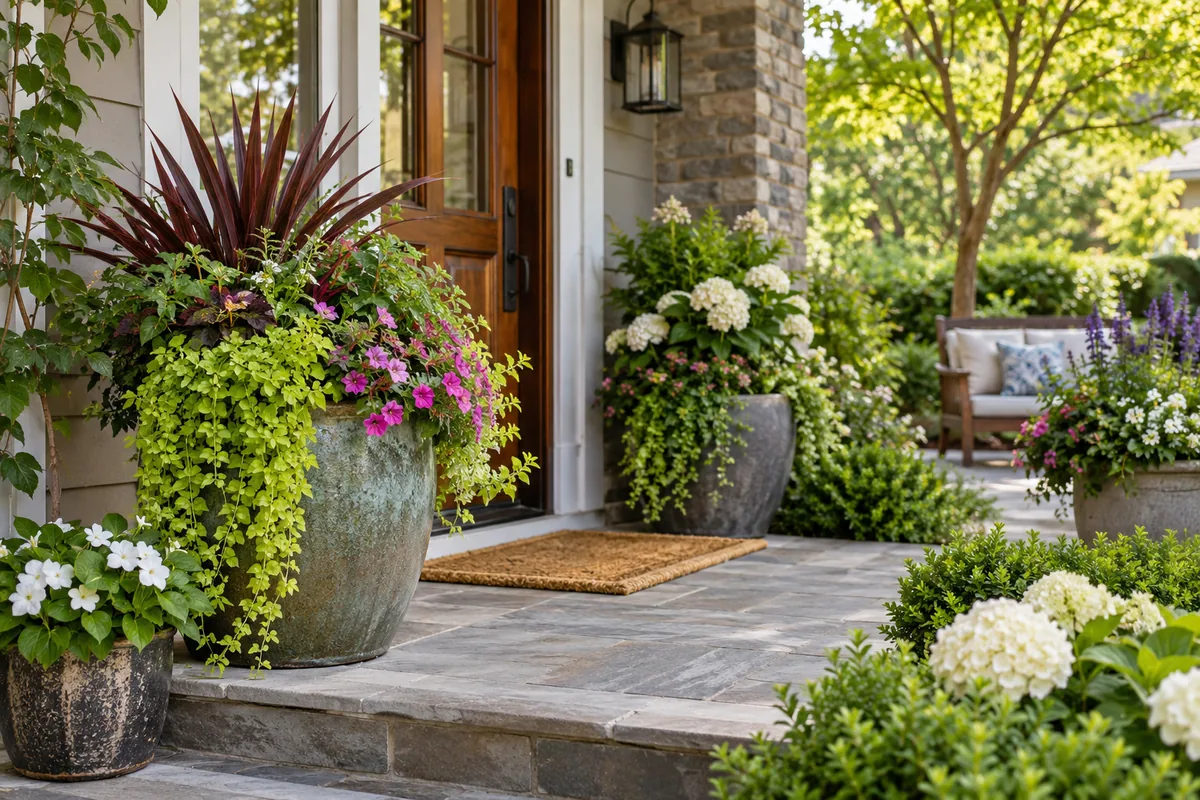
- Make containers seasonal anchors. Group manageable pots beside a sheltered entry when permanent bold foliage is unsuitable locally. It fits a colder-region interpretation if storage and movement are realistic. Work out the winter destination and planted weight first. A container that needs heavy equipment to move is a different commitment from a small seasonal pot beside the porch.
- Retain a quiet paved foreground. Let a dependable arrival surface provide visual rest before the foliage starts. This is useful with a busy leaf palette. Choose finishes for grip, maintenance, and access rather than a resort-like association. A restrained concrete-paver or existing stone surface can support the planting without competing with variegated leaves or strong silhouettes.
- Repeat one leaf contrast along the border. Connect a fine-textured group with a broader-leaved group instead of introducing many unrelated specimens. It suits a frontage where the planted bed has enough depth for layering. Check the actual care needs so the repeated arrangement can be managed. Visual compatibility does not mean both groups want identical soil or water.
- Place light where visitors decide to turn. Illuminate the approach and doorstep before planning dramatic foliage shadows. This works when arrival safety and orientation are clear priorities. Have licensed professionals review outdoor wiring and permits. Check glare from the street, and keep fixtures reachable as plants grow rather than burying them inside a dense border.
- Design the off-season outline. Use locally suitable enduring planting and an orderly bed edge to carry the frontage when seasonal leaves are removed. It suits owners who want a bold summer effect without a neglected winter view. Keep a winter reference beside the summer concept. Seasonal change can be attractive, but empty pots and abandoned supports need an intentional handling plan.
What verification belongs before the plant purchase?
Describe foliage roles, then obtain regional advice on candidates. The USDA hardiness zone, exposure, soil, water, wind, and mature size all need checking. Review local invasive status and use the ASPCA toxicity list where animals reach the bed. Tropical appearance does not establish plant identity, suitability, or safety. Avoid buying from a generated leaf shape without identifying the actual plant.
The tropical style guide explores layering, and planter guidance helps compare container constraints. Any proposed heavy containers on a porch need an appropriate structural check. Licensed local professionals should review grade changes, drainage, foundations, and electrical work. Before excavation in the United States, use 811 and the relevant private utility locating process. Keep those practical checks separate from deciding which leaf contrast looks best from the road.
How will the border stay welcoming as it grows?
Inspect inside the planting rather than only its visible face. Large fallen leaves can collect behind pots, growing stems can hide fixtures, and dense layers can make damaged growth difficult to see. Establish watering and pruning access before the border fills. If a plant repeatedly blocks the approach, reconsider its location or mature size instead of treating constant cutting as the only answer.
AILandscape's front yard tool can visualize tropical-looking options on a property photo. Compare how much enclosure the concept creates around the doorway, then confirm measurements and plant choices independently. The image is for visual discussion, not an assurance of regional performance, structural capacity, or workable drainage. Reject details that obscure the address or modify the house unintentionally. Bold foliage is useful when it strengthens a real entrance rather than turning that entrance into a hidden opening.
常见问题
Can a tropical-looking front yard survive a cold climate?
The visual effect can be adapted with suitable permanent planting and selected seasonal containers. Check winter handling and the view after tender foliage is removed. A style image cannot establish cold tolerance, so verify every actual plant with regional horticultural advice.
Should large leaves go next to the driveway?
Only where their mature growth preserves required visibility and vehicle movement. A lower plant role is often more practical near an arrival edge, with taller foliage farther inside the bed. Assess parked cars and passenger access before positioning containers or broad-leaved plants.
Does tropical frontage planting need many flowers?
Foliage scale, texture, and layering can carry the effect without a large flower display. A limited seasonal accent may add emphasis, but it is optional. Consider the year-round outline and actual plant needs before introducing more colors or maintenance obligations.
参考来源
相关阅读
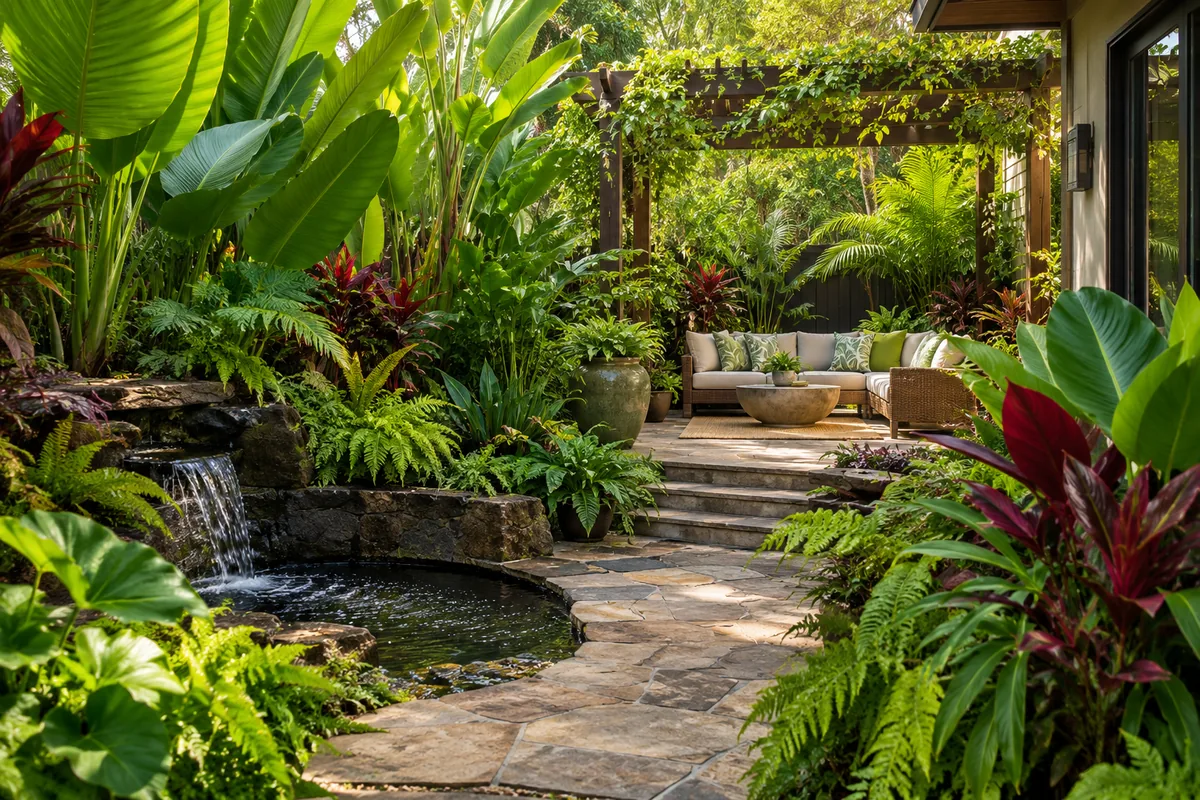
Tropical landscape style: foliage, layers, and shelter
Explore tropical landscape style using large leaves, layered greenery, sheltered seating, and container strategies adapted to local weather and care routines.
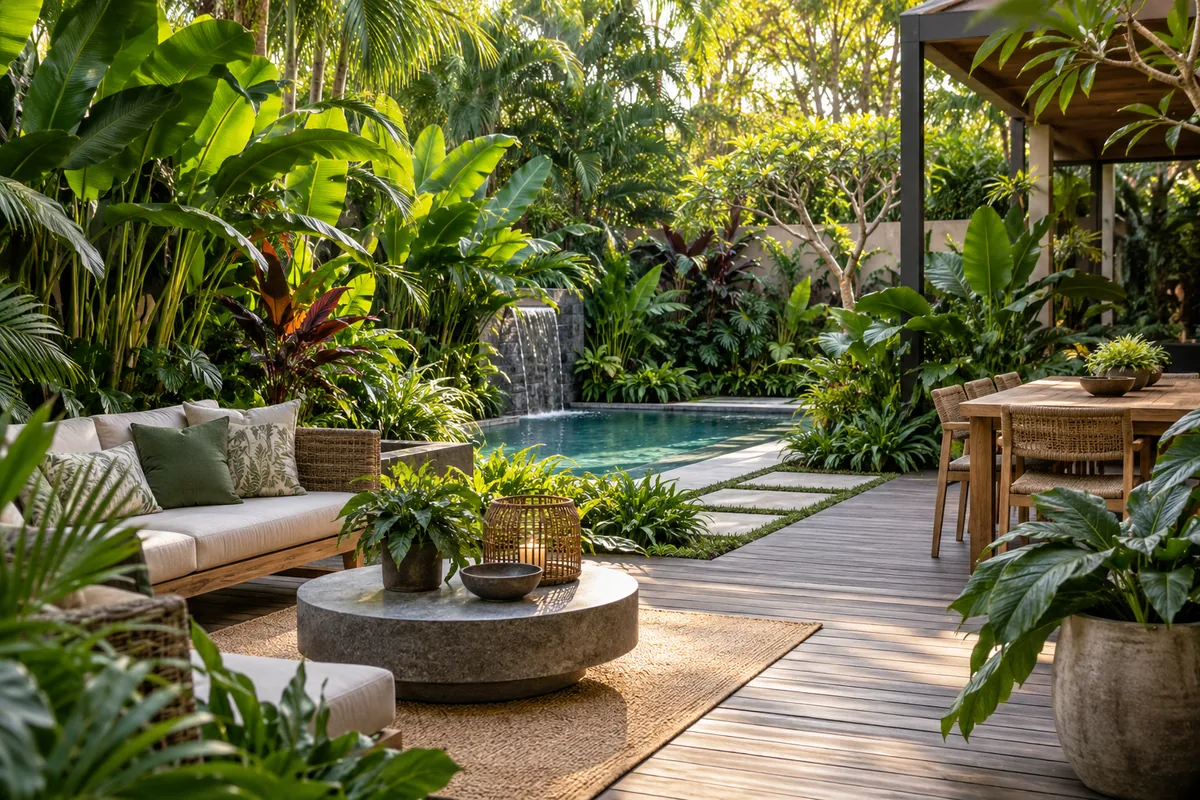
Tropical backyard ideas for leafy rooms and everyday use
Explore tropical backyard ideas for layered foliage, usable seating, sheltered containers, clear garden routes, and realistic care through seasonal changes.
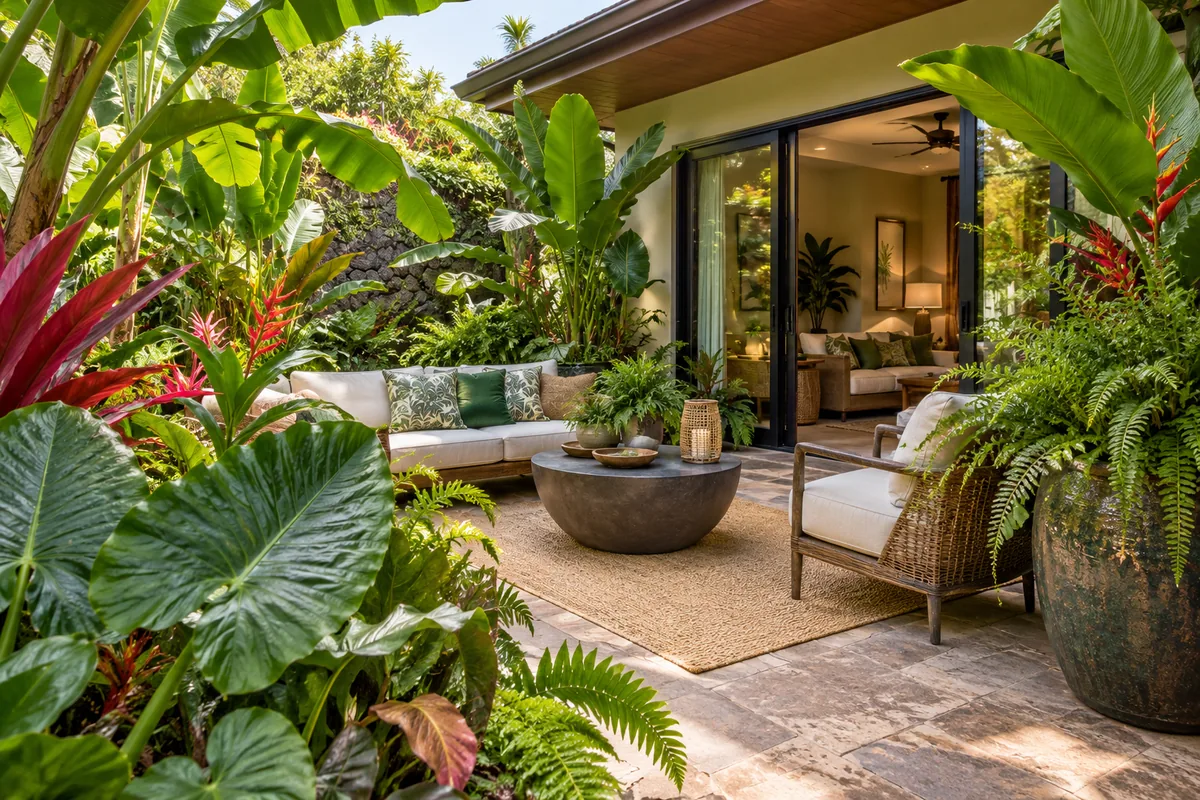
Tropical patio ideas for bold foliage around a useful room
Explore tropical patio ideas for large-leaf views, layered containers, usable furniture, seasonal handling, and safe shade around an everyday outdoor room.
Garden Planters for Useful and Manageable Planting
Learn how garden planters fit your yard, with practical material, placement, upkeep, and safety questions to review before choosing a visual direction.
Ornamental Shrubs for Leaf Texture, Stems, and Repetition
Ornamental Shrubs: Texture, Color, and Rhythm: explore placement, upkeep, and local safety questions before deciding how this feature fits your yard.
Tropical side yard ideas with bold leaves and service access
Explore tropical side yard ideas for bold foliage views, appropriate containers, clear service routes, reachable equipment, and realistic seasonal plant care.