
AI Landscape Design 团队撰写 · 编辑方针
Ornamental Shrubs for Leaf Texture, Stems, and Repetition
Ornamental shrubs can shape a garden through foliage, branching, stems, and seasonal color as well as flowers. Combine a few clear roles and repeat them instead of collecting unrelated accents. Availability and suitability vary across regions; check USDA hardiness zone information and local extension guidance. Verify each selection's mature dimensions and invasive status before using leaf color as the deciding feature.
发布日期 · 阅读约 6 分钟
要点
- Judge texture at the distance from which the border is viewed.
- Use repetition to connect individual foliage and stem accents.
- Choose verified regional plants rather than color alone.
What role should the shrub play beyond flowering?
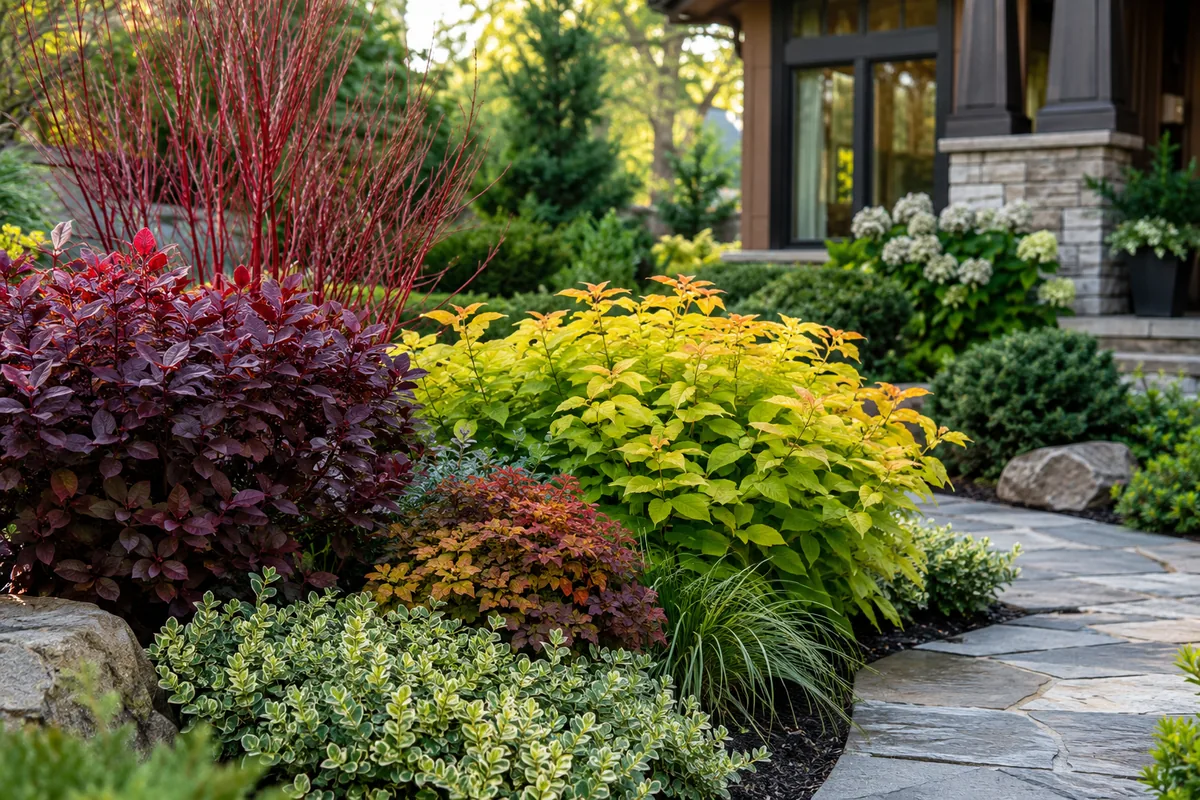
Describe the visual job in ordinary language: a dark backdrop, a fine-textured edge, a broad leaf mass, an exposed winter-stem accent, or a repeated shape along a route. These roles help narrow the palette without assuming every specimen must draw attention. Consider the main viewing distance from a room, patio, or street. Delicate leaf variation visible at close range may read as a single mass from across the yard. A strong silhouette can have more impact at that distance. Decide where an accent belongs and where a quieter supporting shrub will make the whole composition easier to understand.
Which examples illustrate foliage and stem roles?
Investigate the actual selections with local advice; this list is intended to clarify design possibilities, not recommend all eight plants for every garden.
- Red twig dogwood: a winter-stem accent with species and care verified.
- Ninebark: a branching framework and foliage contrast.
- Fothergilla: a seasonal foliage component as well as a flowering shrub.
- Inkberry holly: a broadleaf evergreen mass where locally suitable.
- Winterberry: a seasonal branch-and-fruit role with selection requirements checked.
- Oakleaf hydrangea: broad leaf texture and a substantial border form.
- American beautyberry: a seasonal fruit accent to investigate regionally.
- Spicebush: a locally appropriate shrub possibility within a mixed palette.
Common names are an introduction, not a complete identity. Ask which species and cultivar offer the intended effect in your actual growing conditions.
How do contrast and repetition work together?
Contrast makes a difference noticeable; repetition makes that difference feel intentional. Place a broad leaf mass against finer neighboring foliage, then repeat a compatible form elsewhere so the border does not become a row of disconnected curiosities. Avoid giving every shrub an equally conspicuous leaf color. The house material and retained plants already provide texture, so assess the full setting before adding more. A limited palette can still change seasonally when its chosen forms do different jobs. Compare the view in ordinary daylight and from the main seating position. The design should read as a garden relationship rather than a nursery collection arranged by individual novelty.
What does the winter view ask of the palette?
Imagine deciduous shrubs without leaves and look at their branches, stems, and the spaces between them. Evergreen masses can provide continuity, while deliberately placed stem accents may become more visible against a quiet background. Do not claim that an ornamental shrub supplies the same effect all year. Ask about locally appropriate management of stem-interest plants, because care can influence the appearance and must match the actual selection. Keep the composition balanced during quieter periods. A winter photograph elsewhere does not establish how a plant will look in your climate, especially where foliage retention or seasonal conditions differ from the reference garden.
Why should adult form guide the layout?
Arrange the verified mature shapes around circulation and architectural features. A shrub bought for an unusual leaf can still be the wrong size for a narrow bed. Plan the eventual height and width alongside windows, paths, entrances, and neighboring vegetation. Preserve enough room to inspect and work around the plants. If a desired contrast relies on two large shrubs occupying a very small gap, consider using a different combination or fewer specimens. Pruning ability is not permission to ignore adult form. The most sustainable visual rhythm is one that the appropriate plants can occupy naturally within the available space and expected care.
How should regional and invasive checks change choices?
Confirm your USDA zone, then assess the actual site's light, soil, moisture, and exposure with extension guidance. Cold-temperature suitability alone does not verify the complete growing situation. Check each identity against regional invasive information and restrictions, using USDA National Invasive Species Information Center as an additional resource. Colorful ornamental labels do not prove ecological suitability. Avoid Japanese barberry, and investigate appropriate alternatives for a contrasting foliage role. Locally suitable fothergilla can be worth discussing for seasonal interest rather than copying a problematic shrub's color effect. Availability varies too, so preserve the intended role while allowing qualified local advice to change the species list.
What practical care and household needs remain?
Record what the selected shrubs need during establishment and later care, including whether their desired form relies on specific pruning. Keep claims about growth and longevity qualitative unless there is applicable verified evidence. Where animals can enter the border, check ASPCA resources and veterinary guidance for the exact plants and exposed parts. Decorative fruit is not automatically pet-safe. Plan a route for maintenance that does not require stepping through neighboring beds. Before US excavation, contact 811 and clarify private-service locating. Have grading, drainage changes, and nearby structures reviewed by appropriate local professionals. The ornamental palette should remain understandable and accessible while it develops.
What should a visual study compare?
Use a visual yard study to compare a restrained repeated palette with a more varied mixed border. Notice which masses organize the view and which colors compete with the architecture. AILandscape can explore the appearance but cannot authenticate a rendered shrub, confirm regional suitability, or predict adult form and seasonal performance. Turn the useful visual ideas into a short list of functions for a qualified local designer or extension adviser. Select actual plants afterward and revise the concept around them. A coherent ornamental border depends on verified identities and believable mature relationships, with leaf and stem accents supporting the garden rather than overwhelming every viewpoint.
常见问题
Are ornamental shrubs chosen only for flowers?
No. Foliage texture, branch form, visible stems, and seasonal fruit can all contribute to the composition. Evaluate the desired effect through the year and verify that the actual selection can perform that role in your site and region.
Should every shrub have a contrasting leaf color?
Too many competing accents can make a border difficult to read. Use contrast selectively and repeat compatible forms to connect the layout. Judge the combined mass from the main viewpoint, including the colors and textures already supplied by the house and retained plants.
Can a colorful cultivar avoid invasive-species checks?
A decorative cultivar name or leaf color does not establish ecological suitability or legal availability. Identify the actual plant and review regional guidance and restrictions. Keep the desired visual role open to locally appropriate alternatives instead of treating color as the only criterion.
参考来源
相关阅读
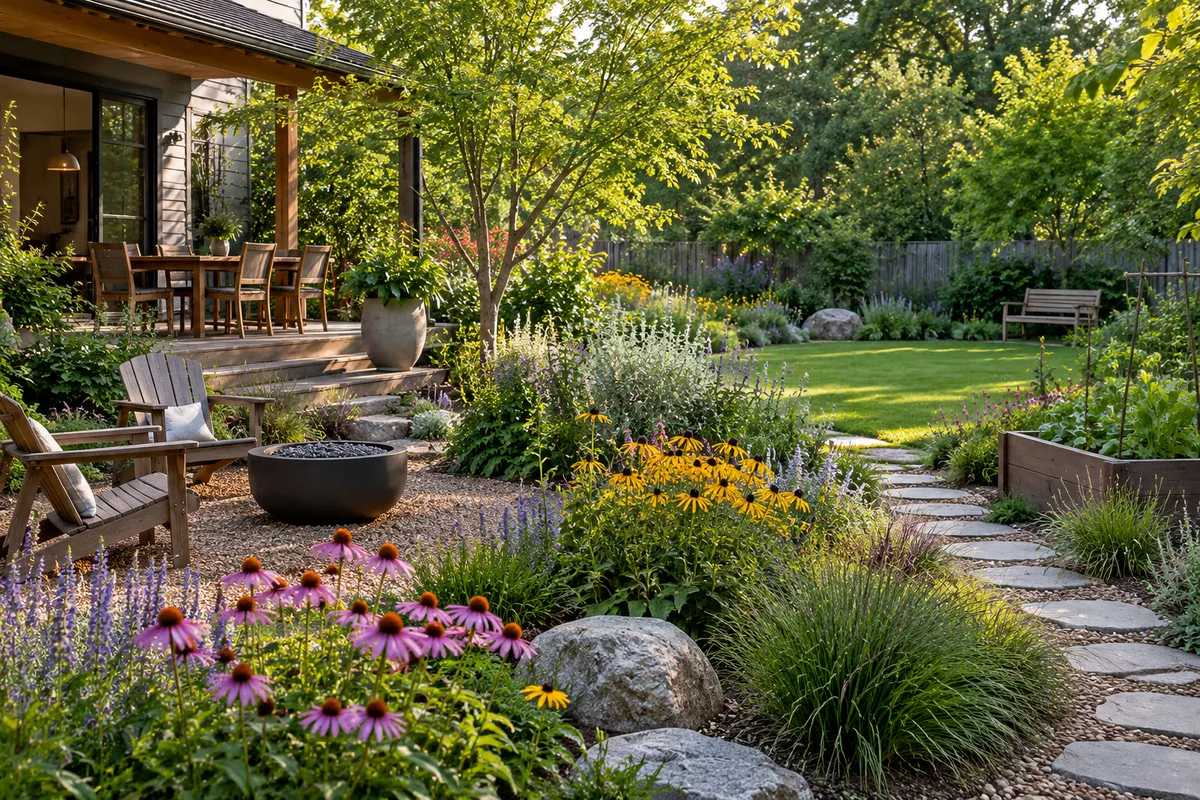
Native backyard ideas for seasonal planting and daily life
Find native backyard ideas for regional plant groups, seasonal texture, clear activity areas, useful access, and locally verified choices around the house.
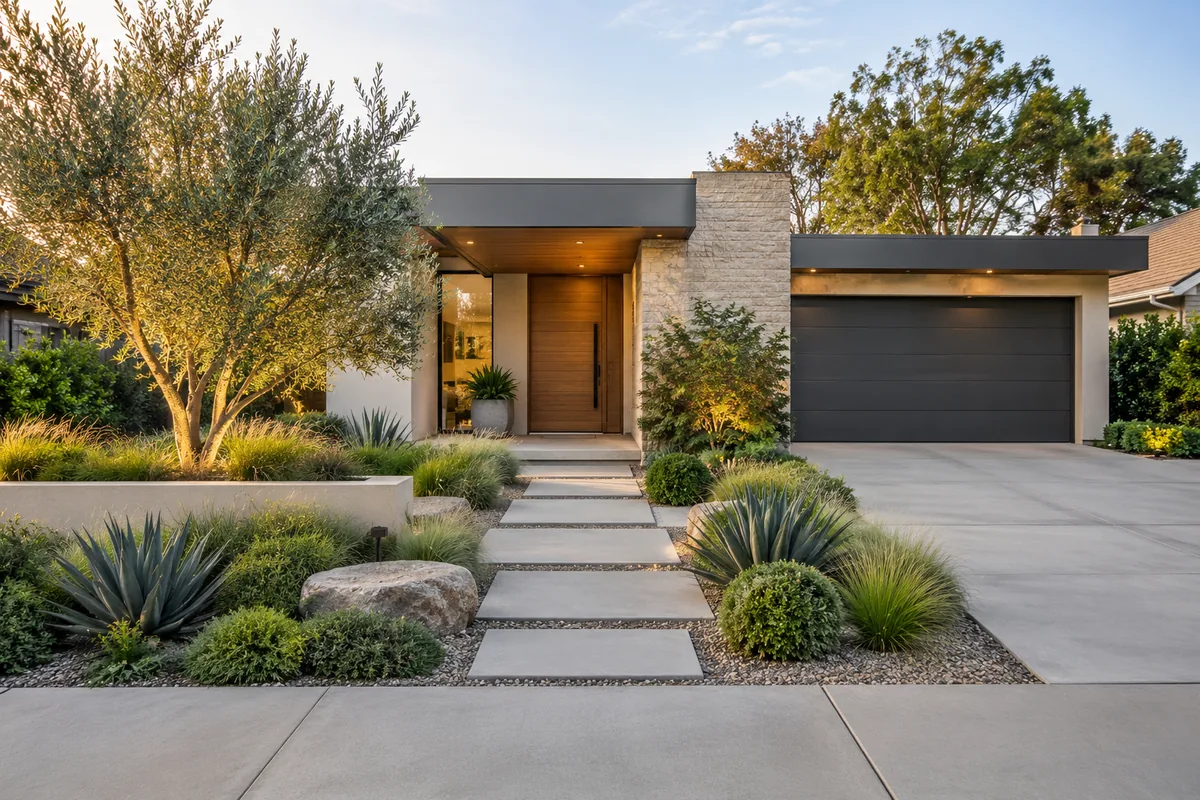
Modern front yard ideas for a clear, composed entrance
Explore modern front yard ideas for clear entrances, repeated planting, restrained materials, readable house numbers, and practical maintenance from the street.
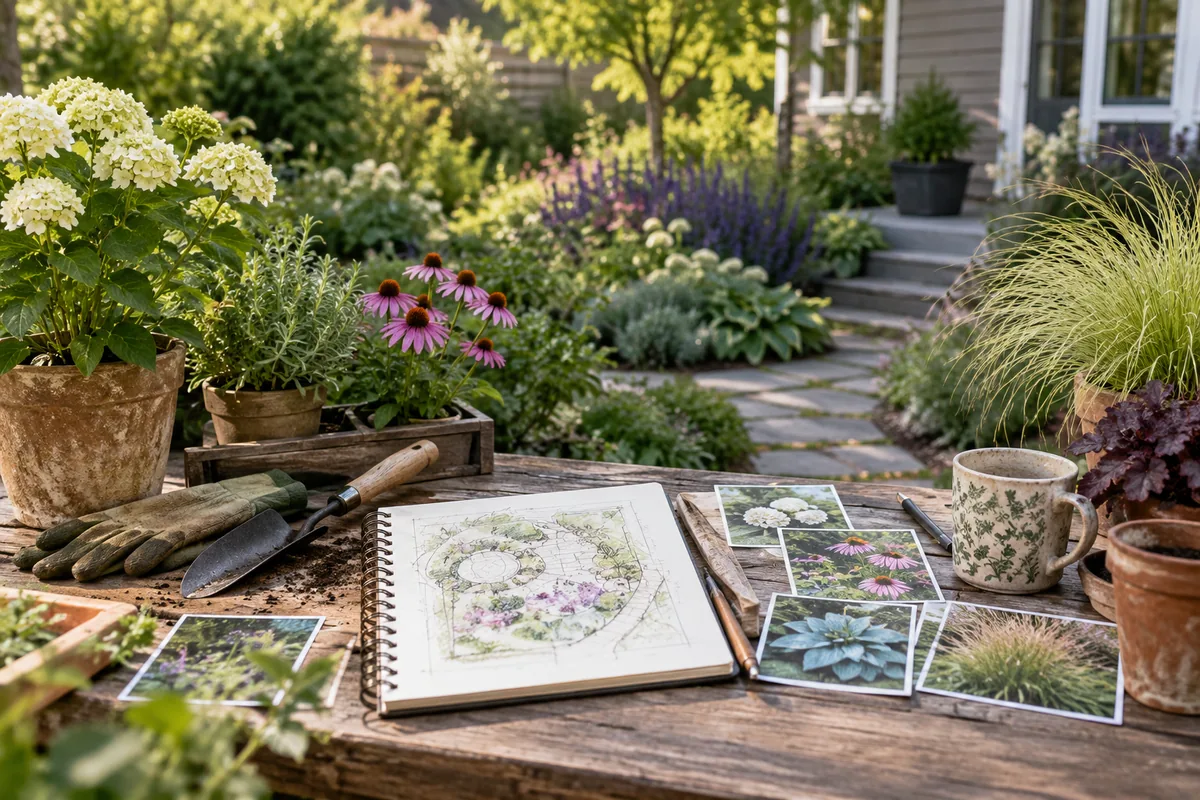
How to Plan a Planting Palette for Your Garden
Plan a planting palette around structure, repeated groups, seasonal interest, and confirmed regional conditions rather than copying species from a garden image.
Climbing Vines for Fences and Walls with Suitable Supports
Climbing Vines: Support, Walls, and Local Fit: explore placement, upkeep, and local safety questions before deciding how this feature fits your yard.
Deciduous Trees for Landscaping and Seasonal Views
Deciduous Trees: Shade, Space, and Local Fit: explore placement, upkeep, and local safety questions before deciding how this feature fits your yard.
Evergreen Shrubs for Foundations and Winter Structure
Evergreen Shrubs: Foundation and Hedge Roles: explore placement, upkeep, and local safety questions before deciding how this feature fits your yard.