
AI Landscape Design 团队撰写 · 编辑方针
Fall Curb Appeal Ideas for a Clear Front Entrance
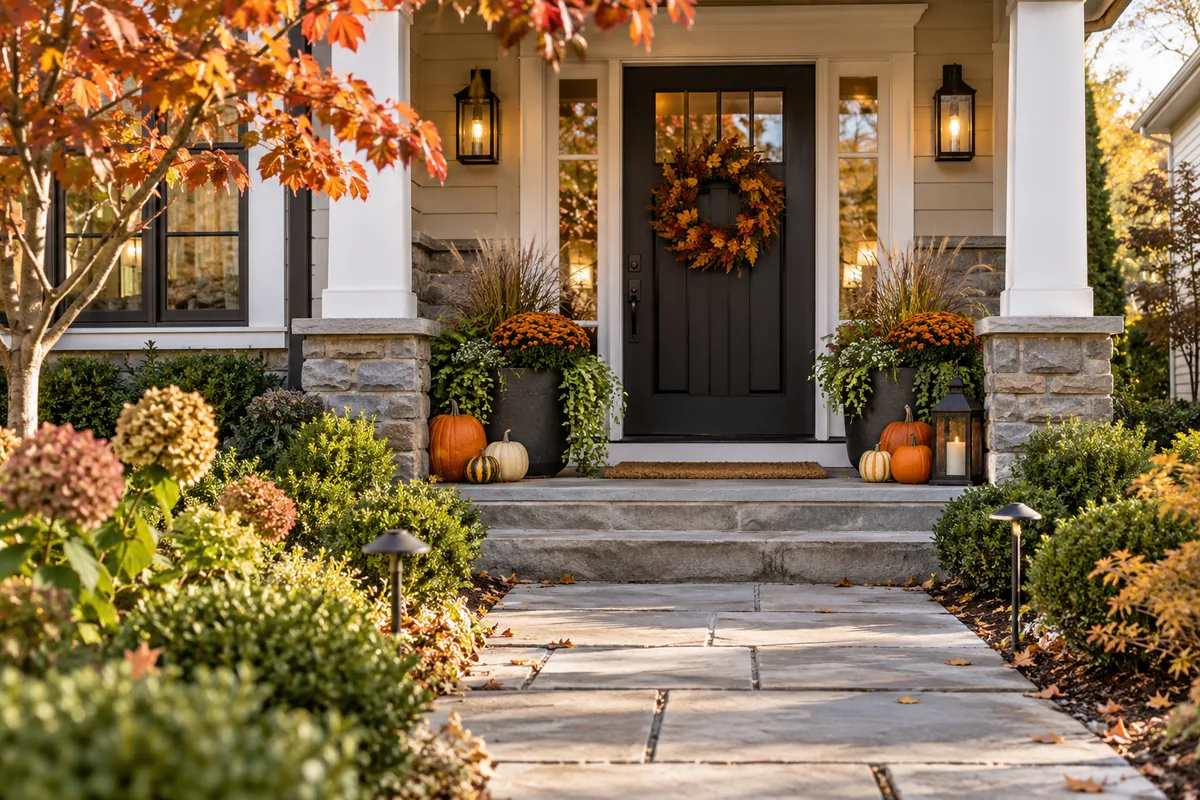
Fall curb appeal ideas should keep the front entrance readable while using a limited set of seasonal planting and decorative details that fit the house and actual access. Review existing foliage, containers, surfaces, and evening arrival before adding more objects. Confirm USDA hardiness and local care for real plants, check toxicity where pets or children can reach them, and have lighting or construction assessed professionally rather than treating an autumn image as a complete site solution.
发布日期 · 阅读约 6 分钟
要点
- Keep the entrance and route clear during seasonal decoration.
- Use restrained details that relate to the house.
- Verify plants, lighting, and actual surface condition.
What does the arrival view already provide?
Look at the frontage from the street, driveway, and approach to the door before purchasing seasonal objects. Existing foliage, building lines, paving, and containers may already create a coherent autumn view. Record what helps people understand the entrance and what obscures it. The purpose of the review is a welcoming, practical arrival rather than a promise of resale value or a complete garden replacement.
In most temperate US climates, fall can change color and leaf presence, but local species and conditions determine the actual display. Seek appropriate horticultural advice for uncertain plant health rather than assuming every change requires replacement. Confirm USDA hardiness and the actual growing environment for new candidates. Keep house services, vents, windows, and gates accessible. A photo may hide door swings or loose material on the approach. Address surface, drainage, tree, or structural concerns with qualified local professionals before decorating around them. The most useful autumn adjustment may be clarification of existing features rather than adding another object to an already crowded frontage.
How can seasonal details remain restrained?
Choose a few details that serve an identifiable role: a container near the entrance, a modest visual accent, or a repeated color relationship. Keep them out of the working route and door operation. Stable placement and actual use matter more than filling every corner. Avoid loose objects, trailing elements, or sharp growth where children, pets, visitors, or equipment need access.
Compare farmhouse style and cottage style as different ways to relate simple materials and planting. Use their organizing ideas without copying every rustic motif or flower from a reference. The house and retained surfaces should help determine the scale and palette of the additions. A crowded display can make the entrance less clear even when individual objects are attractive. Record which detail is the intended emphasis and let the others support it. Seasonal decorations are optional; the frontage can feel coherent through healthy locally suitable planting and readable surfaces without becoming a collection of unrelated autumn products.
Which planting decisions need verification?
Identify the real plants before planning a seasonal color update. Flowers, foliage, and containers need conditions and care appropriate to their species and local use. A warm-colored nursery display does not establish how a plant will perform at the property. Verify USDA hardiness where relevant, light, soil, moisture, mature growth, invasive status, and timing through local nursery or extension advice.
Check toxicity independently through ASPCA for pets’ access and review child hazards separately. A familiar autumn plant or decorative fruit is not automatically safe to place within reach. Containers require suitable drainage, stable positioning, and realistic watering and maintenance. Avoid assuming the depicted species in an AI concept can be identified or purchased directly. Consider the visual roles you want, then ask for verified local candidates. Curb appeal describes the frontage’s impression rather than a specific plant palette or financial result. Keep the planting scheme adaptable if real suitability checks rule out a favored seasonal image or exact variety.
What should evening arrival and surfaces reveal?
Review the approach at the times visitors and residents normally arrive. Note where thresholds, steps, gates, or route changes are difficult to understand. Describe these tasks to a licensed electrician or qualified lighting professional rather than selecting outputs or wiring from a photograph. The path lighting guide can help organize questions about actual use, glare, controls, and maintenance.
Inspect surfaces through appropriate safe observation and refer concerns to qualified local professionals. Seasonal material and container placement can reduce usable access even when the original route was clear. Any changes involving drainage, levels, structures, or electrical work need independent assessment. Before digging in the United States, contact 811 and arrange private-service locating as needed. Do not interpret a glowing autumn reference as evidence of safe night visibility or installed performance. Visual warmth is only one part of arrival. The actual route and supporting systems must work for the people using them, with technical information beyond the appearance of the frontage.
How can the final visual direction be reviewed?
Prepare a simple list of retained features, seasonal roles, access priorities, real plant candidates, and professional questions. Compare the proposed additions with the house view and ordinary arrival movement. Remove items that duplicate the emphasis or create upkeep that the owner cannot support. Review the design outside the peak color moment so it does not depend entirely on a temporary display.
AILandscape can explore a front-yard visual concept from a photo. AI concepts remain inspiration and cannot verify species, toxicity, measurements, lighting, drainage, or construction. Note invented or changed features, then confirm actual plant and installed choices with local experts before purchase or work. A simpler arrangement may make the entrance more readable than a dramatic image full of seasonal objects. The goal is a frontage that fits its real setting and can be cared for, not a guaranteed value increase or a photograph that promises every autumn detail will last unchanged. Keep the concept connected to practical use as the season develops.
常见问题
Does fall curb appeal require many decorations?
A clear entrance and a restrained set of coherent details may be more useful than filling every available space. Keep access, door operation, and maintenance visible. Seasonal decoration is optional, and a frontage can work through existing planting and surfaces without a large product display.
Can autumn plants be selected by flower color alone?
Color is one preference, but real light, soil, moisture, local timing, hardiness, mature growth, invasive status, and toxicity require verification. Ask local experts about exact species. A visually coordinated display can still be unsuitable or unsafe for the actual entrance area.
Will a front-yard concept confirm evening lighting?
A visual concept can suggest atmosphere or emphasis but cannot establish illumination, glare, electrical design, or safe installed performance. Describe the actual arrival tasks to qualified local professionals. Site information and technical assessment must guide lighting decisions separately from the autumn aesthetic.
参考来源
相关阅读
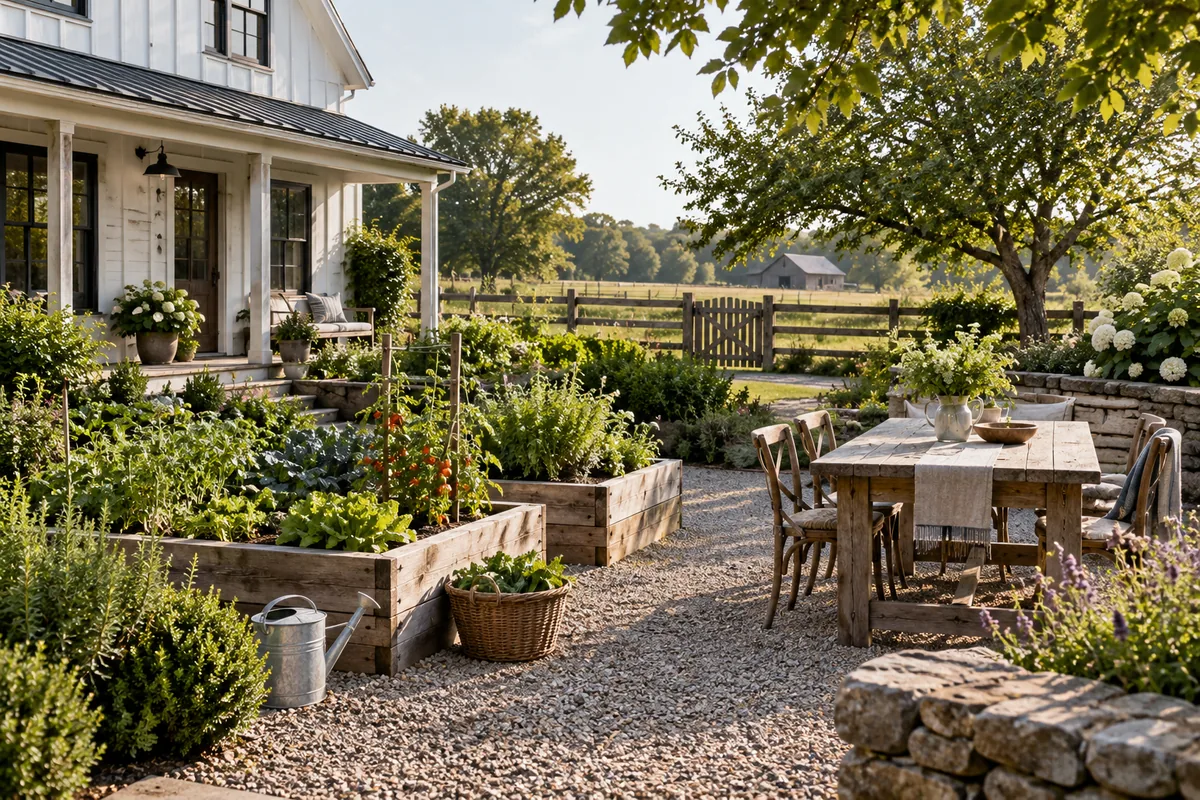
Farmhouse landscape style: useful spaces and honest materials
Discover farmhouse landscape style through practical fences, productive beds, wood and stone, and useful outdoor spaces that support everyday garden routines.
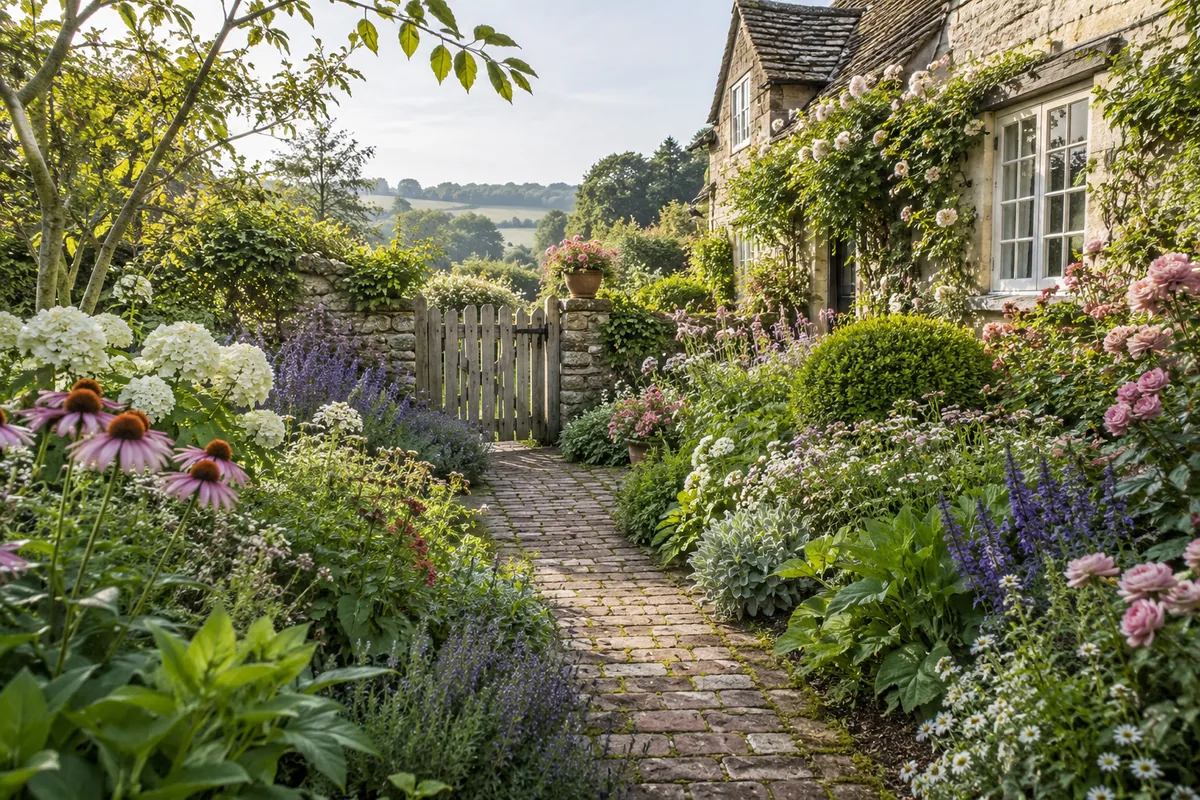
Cottage garden style: flowers with a working framework
Explore cottage garden style through layered flowers, selective self-seeding, clear paths, seasonal care, and the framework that makes informal planting usable.
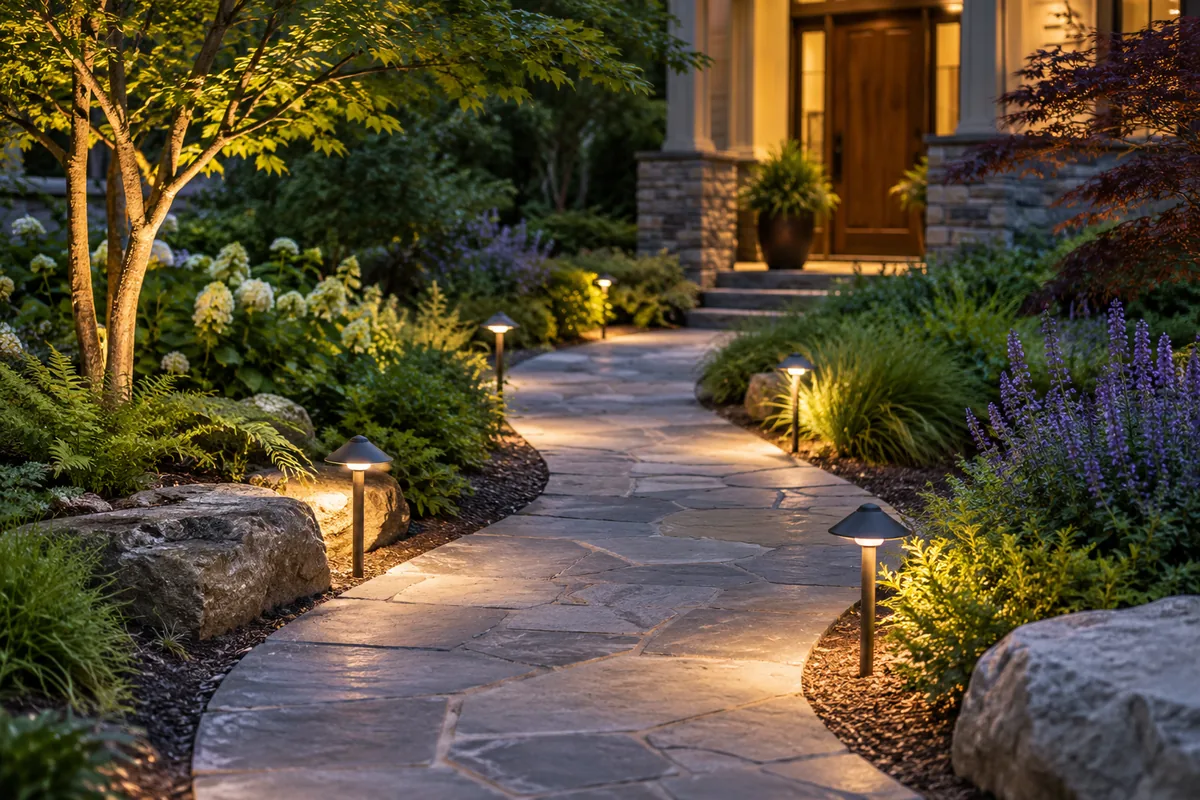
Path Lighting Ideas Built Around the Walking Route
Compare path lighting ideas using the actual route, fixture light patterns, glare, solar exposure, maintenance access, and qualified electrical installation.
What Is Curb Appeal in Landscape Design?
Learn what curb appeal means in landscape design, with a practical yard example, related terms, and the site decisions to check before making changes.
Brick Pavers for Useful Patios and Garden Paths
Brick Pavers for Patios and Paths: explore materials, placement, upkeep, and local safety questions before deciding how this feature fits your yard.
Garden Fence Ideas for Privacy and Practical Use
Learn how garden fence ideas fit your yard, with practical material, placement, upkeep, and safety questions to review before choosing a visual direction.