
AI Landscape Design 团队撰写 · 编辑方针
What Is Dry Creek Bed in Landscape Design?
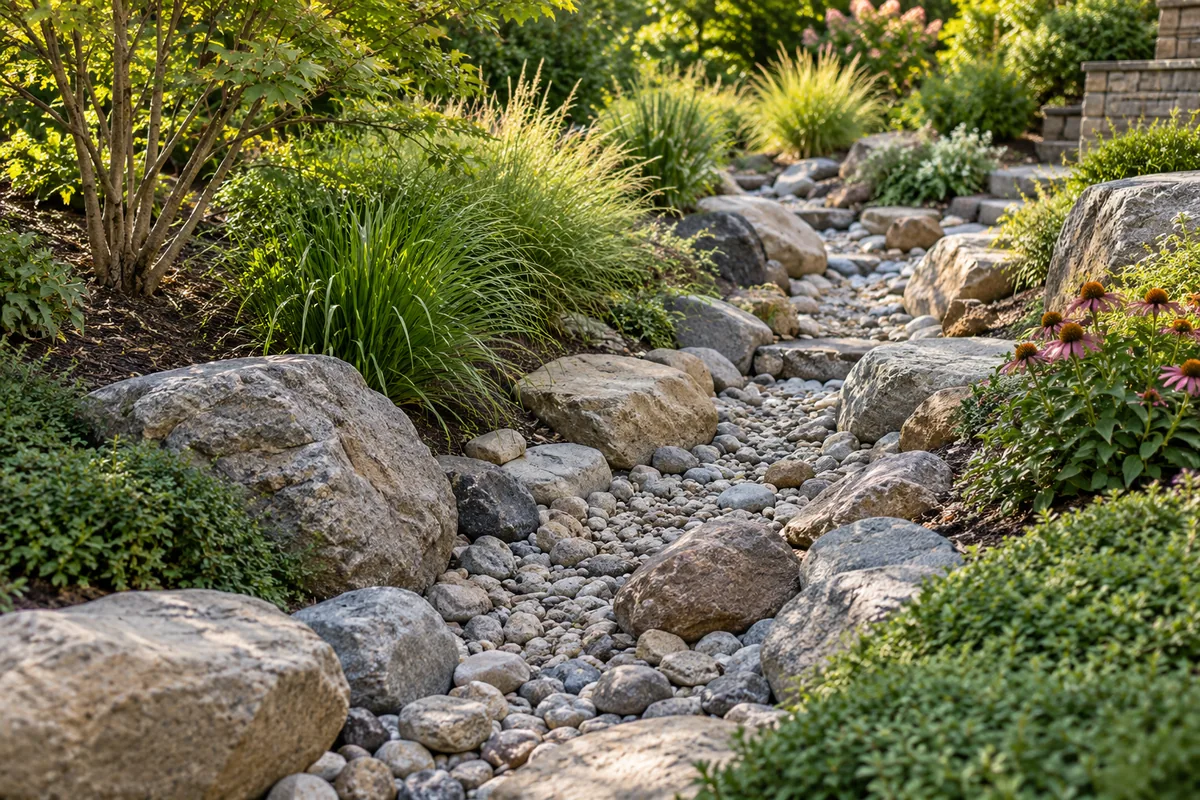
A dry creek bed is a landscaped channel or strip arranged with stone to resemble a streambed when dry, sometimes designed to participate in site water management. The visual name does not establish a drainage function. An ornamental stone feature and a professionally designed runoff channel may look similar. Terrain, soil, water sources, and destinations need assessment before the appearance is treated as a working system.
发布日期 · 阅读约 2 分钟
要点
- Stone appearance does not establish drainage function.
- Clarify ornamental and water-management goals.
- Verify runoff destinations before earthwork.
How is dry creek bed used in landscape design?
Distinguish the ornamental objective from any claimed water-management role. Choosing stone colors or a curved outline is a visual decision; collecting or redirecting runoff is a site decision. Qualified local professionals should assess slopes, soil, discharge, and nearby structures. This definition provides no dimensions, capacities, or construction layers for a channel because those depend on actual conditions.
What does dry creek bed look like in a yard?
In a backyard concept, a curved stone strip might create contrast beside planting. Keep walking routes and maintenance access visible. If the strip is intended to receive water, establish where that water will go and whether the location is suitable. Contact 811 before digging in the United States and arrange any additional private utility locating needed at the property.
Which terms help explain dry creek bed?
A swale describes a depressed water-management landform; grading shapes the site; positive drainage describes an intended outcome. A dry creek appearance cannot substitute for those assessments. AI visualization can explore the stone composition, but safe drainage function, planting suitability, and installation must be confirmed locally before work.
常见问题
Does every dry creek bed carry water?
Some dry creek beds are primarily decorative, while others form part of a designed water-management system. Clarify the intended function before installation. The stone appearance does not establish capacity, outlet behavior, or suitability for a particular runoff problem.
Can a dry creek bed solve standing water?
Standing water needs investigation of its causes and the available drainage destinations. A stone channel is not a universal remedy. Ask a qualified professional to assess soil, levels, and water movement before reshaping the ground or buying materials.
Can plants grow beside a dry creek bed?
Planting may fit visually beside the feature, but actual conditions can vary if water moves through the area. Verify local hardiness, moisture behavior, and invasive status before selection. A rendered streamside plant does not prove that the species suits the site.
参考来源
相关阅读
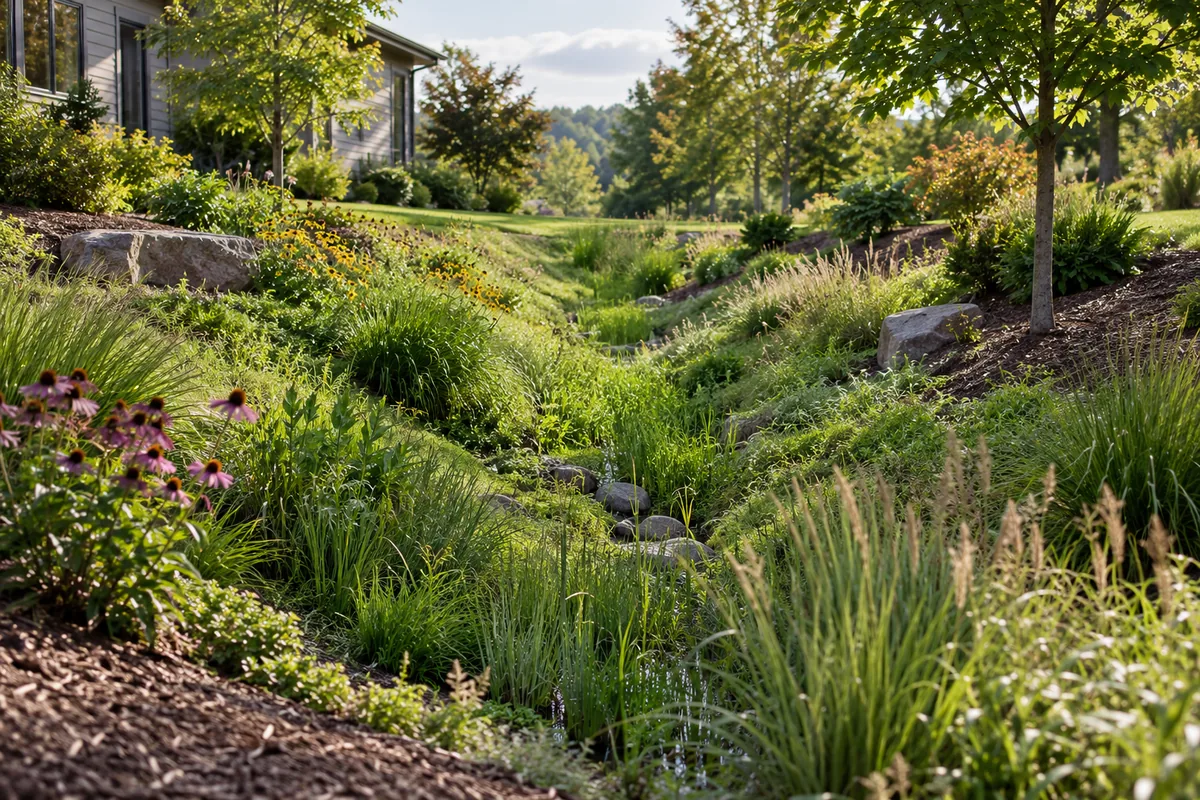
What Is Swale in Landscape Design?
Learn what swale means in landscape design, with a practical yard example, related terms, and the site decisions to check before making changes.
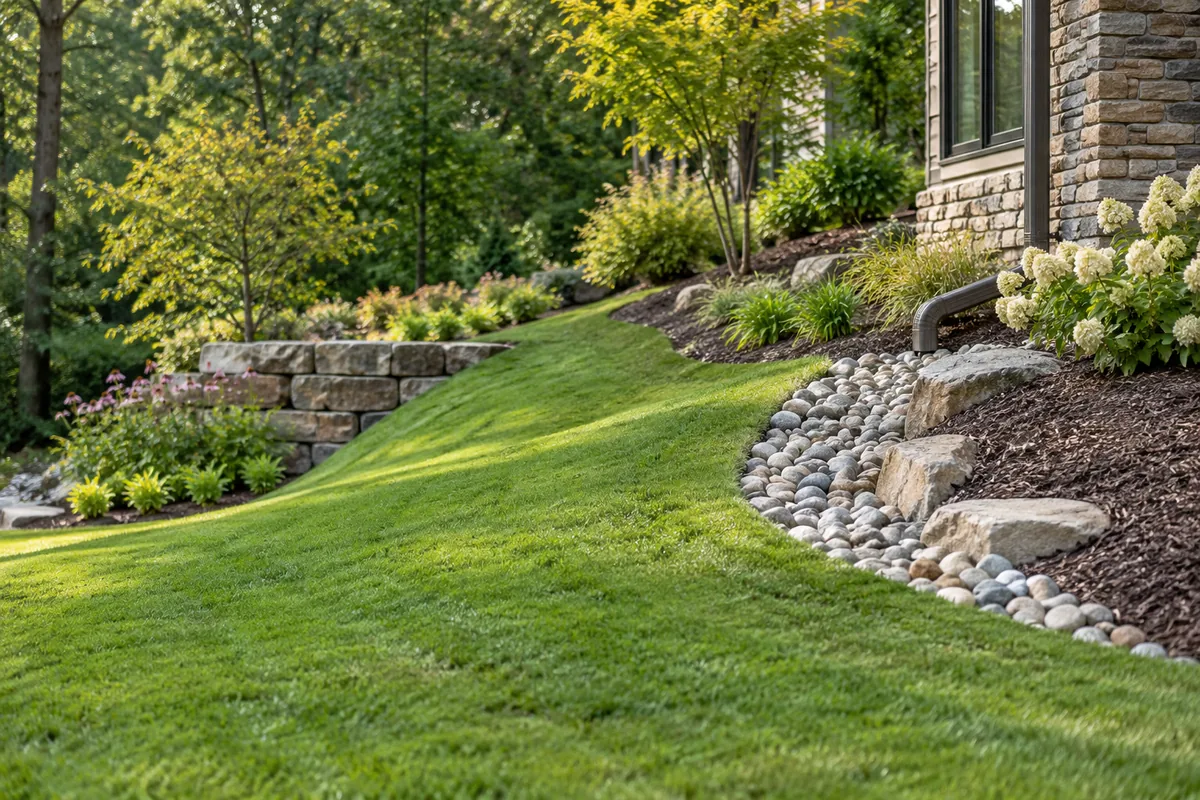
What Is Grading in Landscape Design?
Learn what grading means in landscape design, with a practical yard example, related terms, and the site decisions to check before making changes.
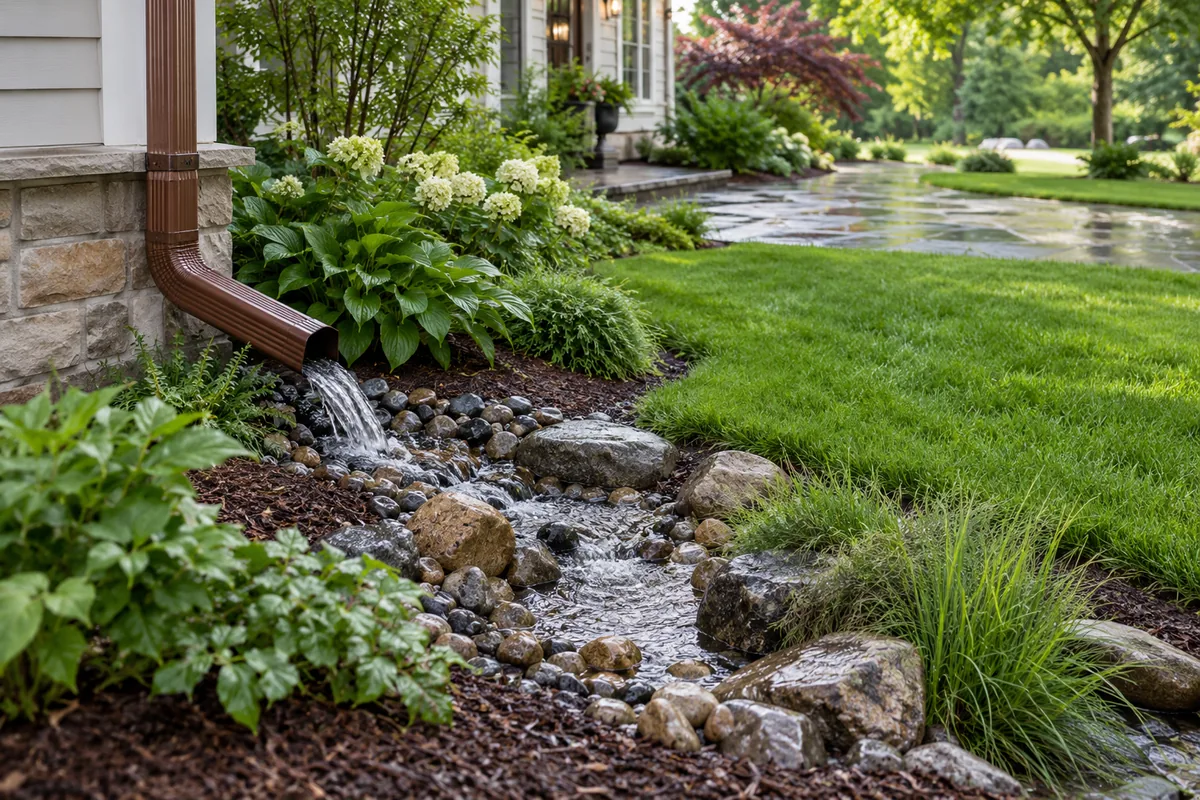
What Is Positive Drainage in Landscape Design?
Learn what positive drainage means in landscape design, with a practical yard example, related terms, and the site decisions to check before making changes.
Gravel Paths That Fit Real Garden Movement
Learn how gravel path ideas fit your yard, with practical material, placement, upkeep, and safety questions to review before choosing a visual direction.
Desert landscape style: shade, stone, and plant form
Understand desert landscape style through plant form, mineral surfaces, useful shade, and heat-aware layouts, while separating its appearance from xeriscaping.
Desert backyard ideas that make room for comfortable living
Explore desert backyard ideas for useful shade, open plant forms, mineral surfaces, flexible activity space, and practical care around seats and dining areas.