
AI Landscape Design 团队撰写 · 编辑方针
Perennial Flowers for Seasonal Roles and a Readable Border
Perennial flowers can return as part of a garden's lasting planting framework, with different selections contributing at different seasonal stages. Plan around mature form, suitable conditions, and care rather than continuous-bloom promises. Availability and suitability vary by region; verify USDA hardiness context and local extension guidance. Division and deadheading decisions should match the actual plant and desired garden role.
发布日期 · 阅读约 6 分钟
要点
- Organize a seasonal relay by roles rather than fixed dates.
- Leave adult plant room and usable maintenance access.
- Check whether division or deadheading suits the actual selection.
What makes the border readable through change?
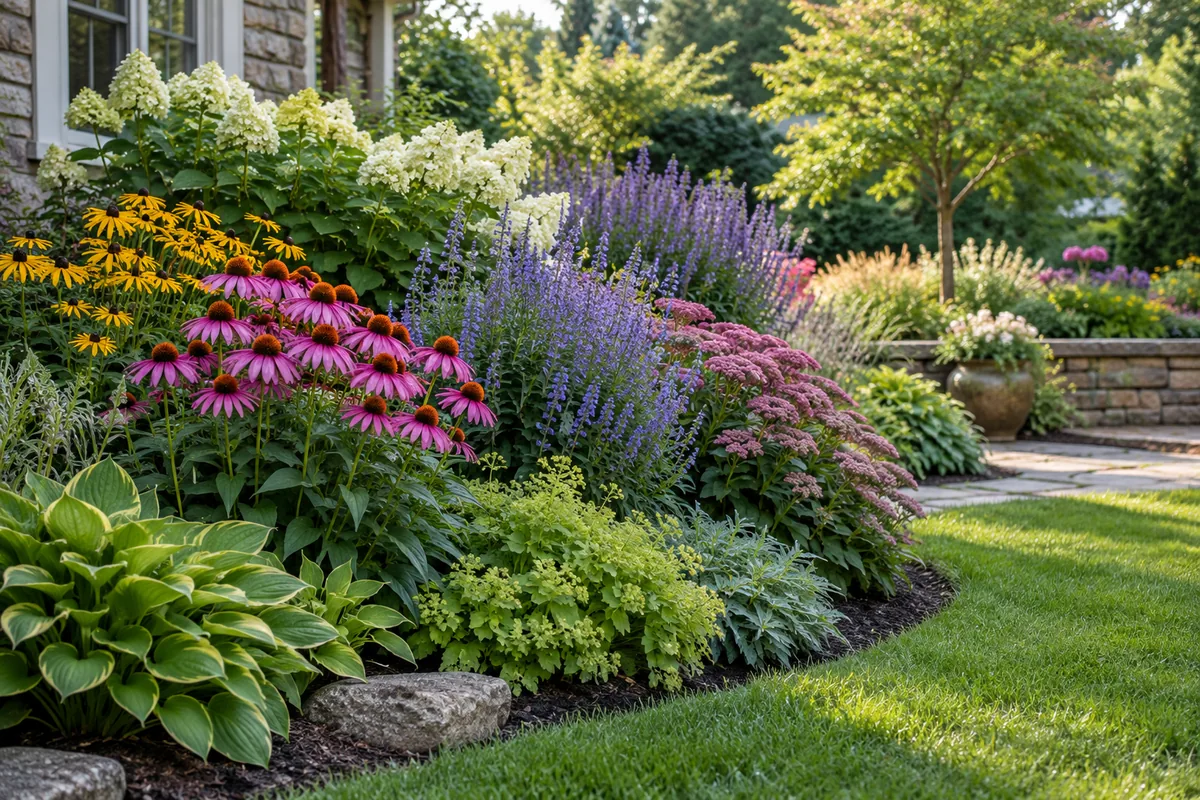
Choose a basic arrangement of plant masses that works outside flowering peaks. Repeated forms, a clear edge, and useful foliage can keep the border understandable while different flowers take their turn. Decide which viewpoint matters: the approach to the house, a room window, or a patio seat. Fine details visible close up may not organize a large bed from that distance. Put the most conspicuous seasonal roles where they support the whole view. A perennial border should not depend on every plant flowering together to look intentional. Treat changing bloom as a contribution to an already clear composition, rather than its sole organizing principle.
Which examples suggest different perennial roles?
Use these eight examples to discuss a regional palette. The actual species and cultivar determine suitable conditions, adult form, seasonal behavior, and care.
- Columbine: a lighter flowering accent for an assessed setting.
- Wild geranium: a regional flower-and-foliage component.
- Baptisia: a substantial perennial framework where adequate room exists.
- Coneflower: a flower mass with the exact identity and conditions checked.
- Black-eyed Susan: a seasonal color repeat appropriate to the selection.
- Bee balm: a flower role whose spreading behavior needs review.
- Aster: a later-season possibility with species-specific local timing.
- Goldenrod: a seasonal native-led option chosen by actual species and site.
Availability differs locally. Ask extension guidance about the complete palette instead of assuming these common names form a suitable ready-made border.
How can a seasonal-role table guide discussion?
Use broad stages to assign roles, then verify the actual selections locally. This table organizes the design conversation rather than forecasting exact dates or guaranteeing flowers in every stage.
| Seasonal stage | Intended role | Example to investigate locally |
|---|---|---|
| Earlier growing season | A lighter accent near the approach | Columbine or wild geranium |
| Main warm growing period | A clear flower mass beside seating | Coneflower or bee balm |
| Later growing season | Continued border emphasis | Aster or goldenrod |
| Quieter or dormant period | Structure from suitable foliage and retained stems | The actual perennial and neighboring framework |
Weather and regional conditions can shift the sequence. Leave the final timing and species choices to locally applicable observations and advice.
When is division a relevant care question?
Some perennials can be divided as part of appropriate propagation or border management, while others call for different treatment. Ask about the actual selection, its condition, and local timing before lifting or cutting a plant. Do not schedule every perennial for identical recurring division. Consider whether the border has adequate space for adult clumps and whether access makes care practical. If a plant repeatedly exceeds the intended role, assess the palette instead of using division as a permanent answer to crowding. The care plan should support suitable plants in appropriate positions, with local advice determining which interventions make sense and when.
Should every faded flower be removed?
Deadheading means managing spent flowers, but its usefulness and method depend on the plant and the intended role. RHS guidance describes different approaches rather than one universal cut. Ask whether retaining seed heads supports the desired seasonal appearance or habitat goals, and whether removing them is appropriate for the selection. Avoid promising that every cut creates another bloom. A tidier foreground and a looser background may need different expectations. Keep the border's purpose clear before deciding that all spent material is untidy. Plant-specific care and locally appropriate ecological considerations should shape the treatment, not a demand that every flower remain at its photographic peak.
What growing and invasive checks should narrow the list?
Review USDA zone for winter-temperature context, then evaluate light, soil, moisture, exposure, and local seasonal conditions with extension help. Check each exact species against regional invasive information and restrictions. Native status is geographic, so verify where a proposed native actually belongs instead of treating the entire country as one region. Conditions and plant availability also affect the achievable palette. Leave mature room around pathways and neighboring roots. A perennial may return seasonally yet still be the wrong choice for a particular bed. Suitability should determine the planting list before decorative color combinations, not be inferred afterward from a convincing reference picture.
How do household routines influence the border?
Plan water access, observation, tools, and maintenance routes before filling the bed. Where pets can reach flowers, foliage, or fallen material, consult ASPCA information and veterinary guidance for the actual plants. Do not assume the perennial category implies safety. Decide who will manage establishment and later seasonal tasks, and avoid unsupported longevity or growth-rate claims. For a US planting project involving excavation, arrange 811 locating and investigate any privately installed services. Significant changes to drainage, retaining features, or nearby structures require appropriate professional assessment. A readable perennial border also needs to be a workable place for the household, with its maintenance responsibilities visible beyond the initial planting event.
What should be carried forward from a concept?
Compare the placement of repeated flower masses and quieter supporting forms in a visual yard concept. AILandscape can explore that arrangement but cannot establish species identity, seasonal timing, toxicity, division needs, or local growing fit. Record the desired roles and discuss them with an extension adviser or qualified local designer. Choose actual selections and revise the layout to their mature forms. The seasonal table can remain a brief for that conversation without becoming a claim of exact bloom dates. A useful final palette combines verified plants, adequate adult room, and manageable care while preserving the garden's clear structure through changing seasons.
常见问题
Do perennial flowers guarantee continuous bloom?
A perennial border changes with selection, weather, region, and care. Plan a sequence of roles and include foliage or structure between displays. The plants' seasonal return does not establish uninterrupted flowers or fixed dates for the actual garden.
Must every perennial be divided?
Division suitability and timing depend on the actual plant and its condition. Obtain specific local advice before treating division as a routine for every selection. Adequate mature space and an appropriate palette can reduce the need to manage preventable crowding.
Is deadheading always the best appearance choice?
The answer depends on the plant and intended role. Some retained seed heads may contribute seasonal structure or other locally relevant benefits, while selected foreground plants may suit different care. Confirm the actual treatment instead of removing every spent flower automatically.
参考来源
相关阅读
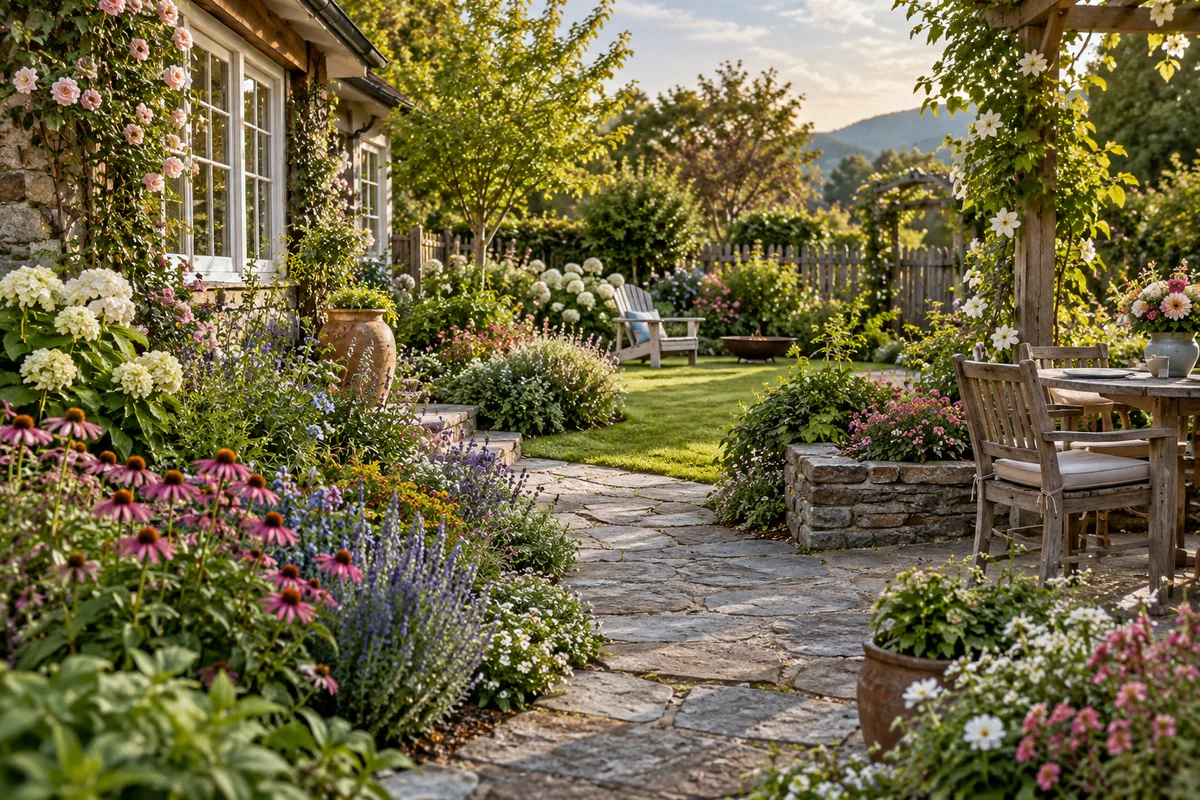
Cottage backyard ideas for flowers, seats, and seasonal life
Explore cottage backyard ideas for layered flowers, comfortable seats, connected borders, productive corners, and practical access through seasonal planting.
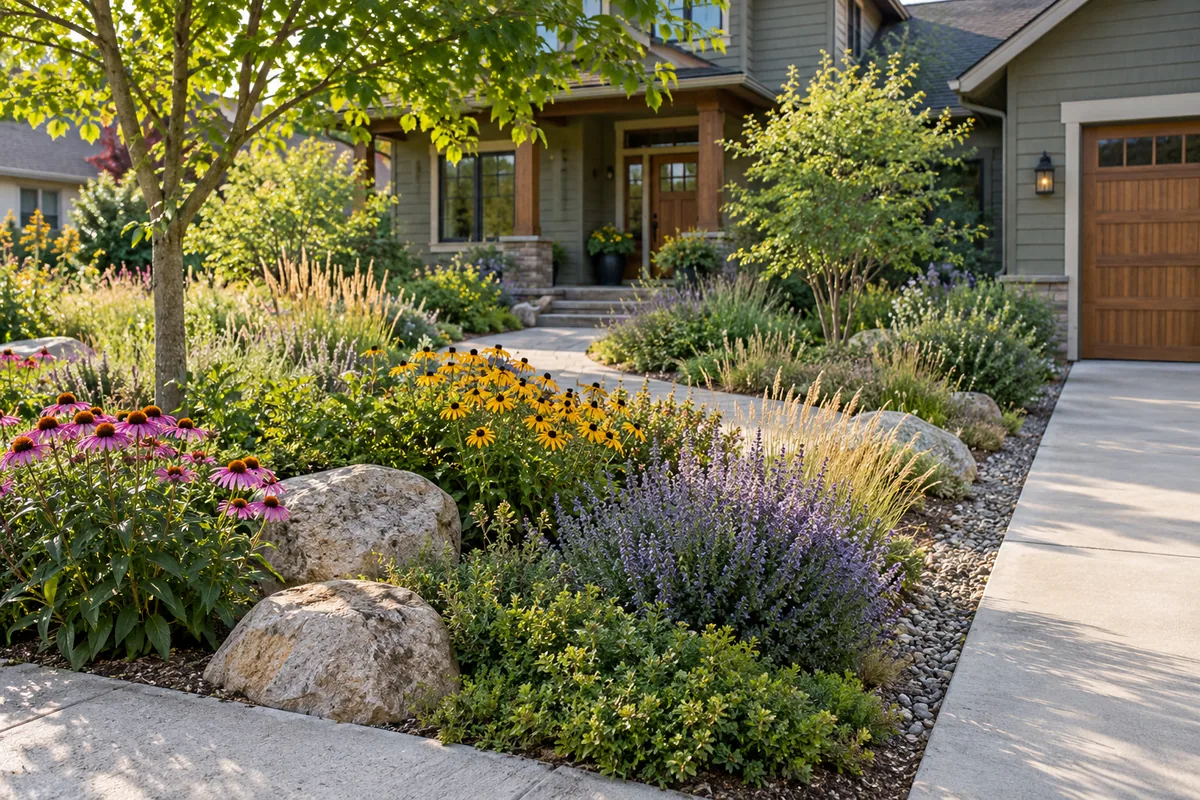
Native front yard ideas that make seasonal planting intentional
Find native front yard ideas for regional plant groups, legible borders, seasonal texture, visible entrances, and practical care in a publicly viewed garden.
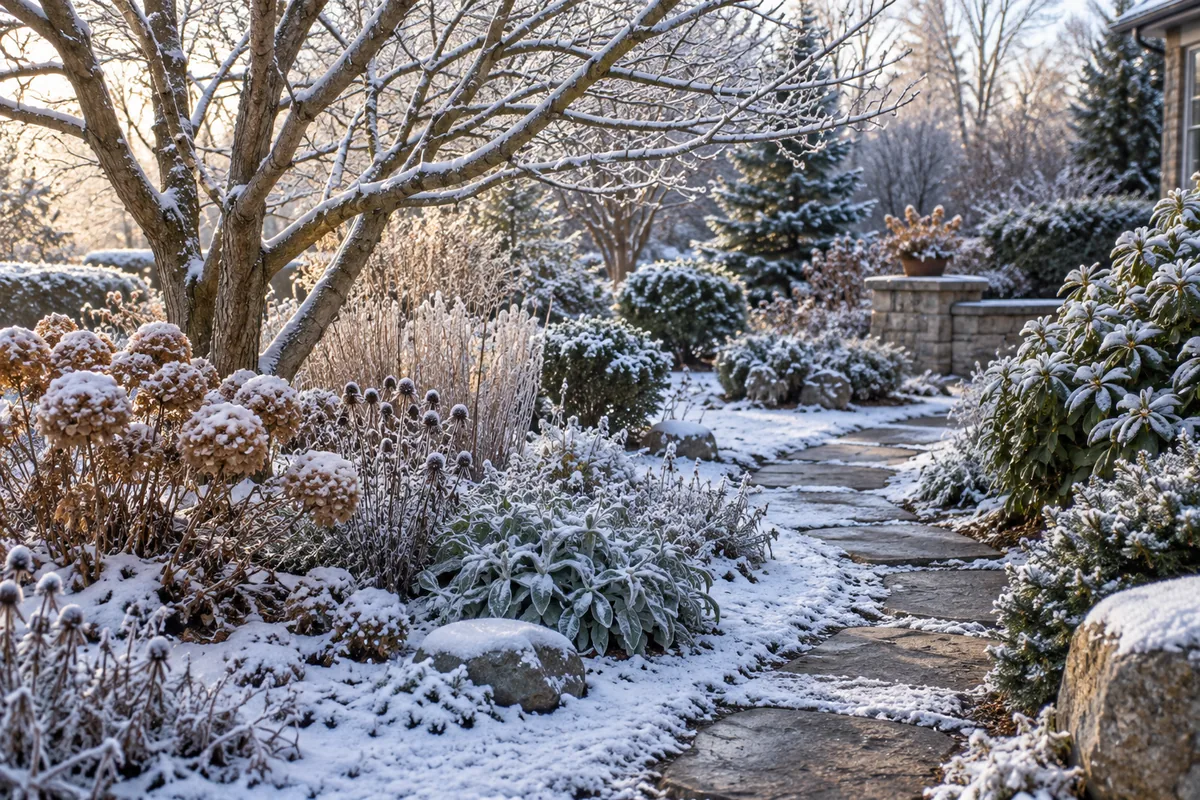
What Is Hardiness Zone in Landscape Design?
Learn what hardiness zone means in landscape design, with a practical yard example, related terms, and the site decisions to check before making changes.
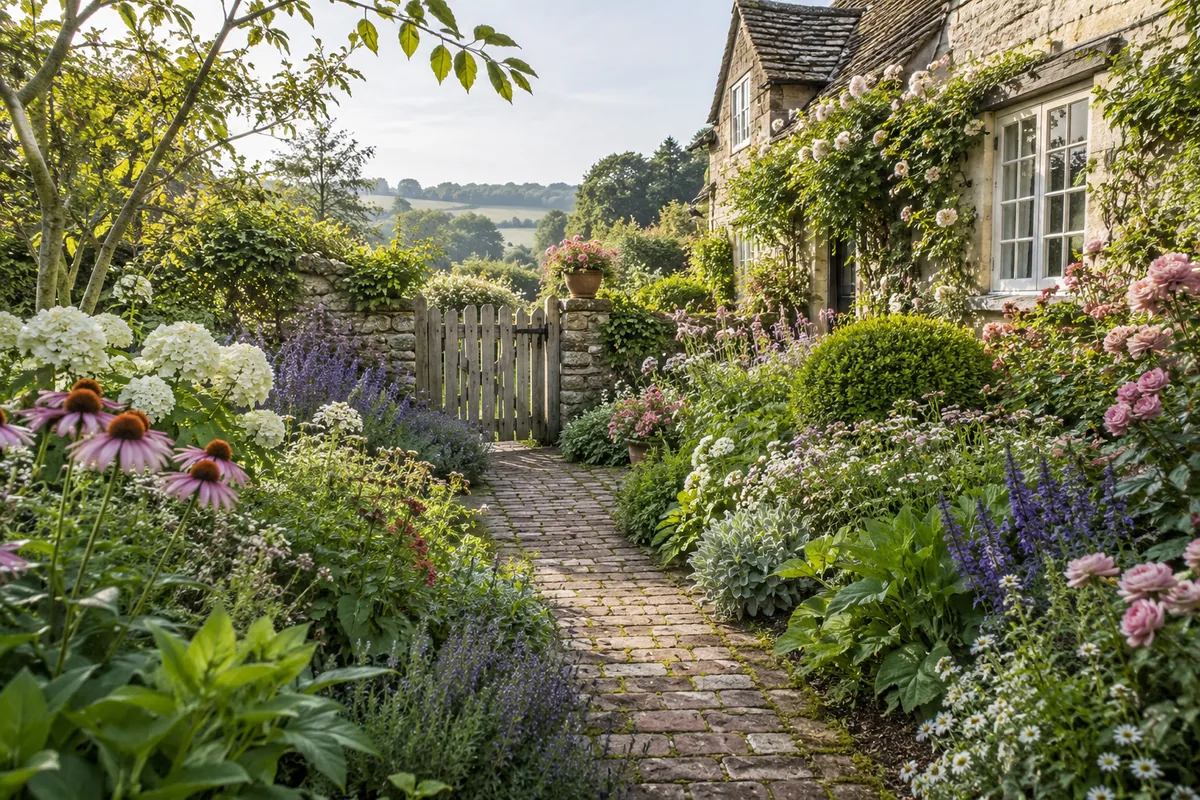
Cottage garden style: flowers with a working framework
Explore cottage garden style through layered flowers, selective self-seeding, clear paths, seasonal care, and the framework that makes informal planting usable.
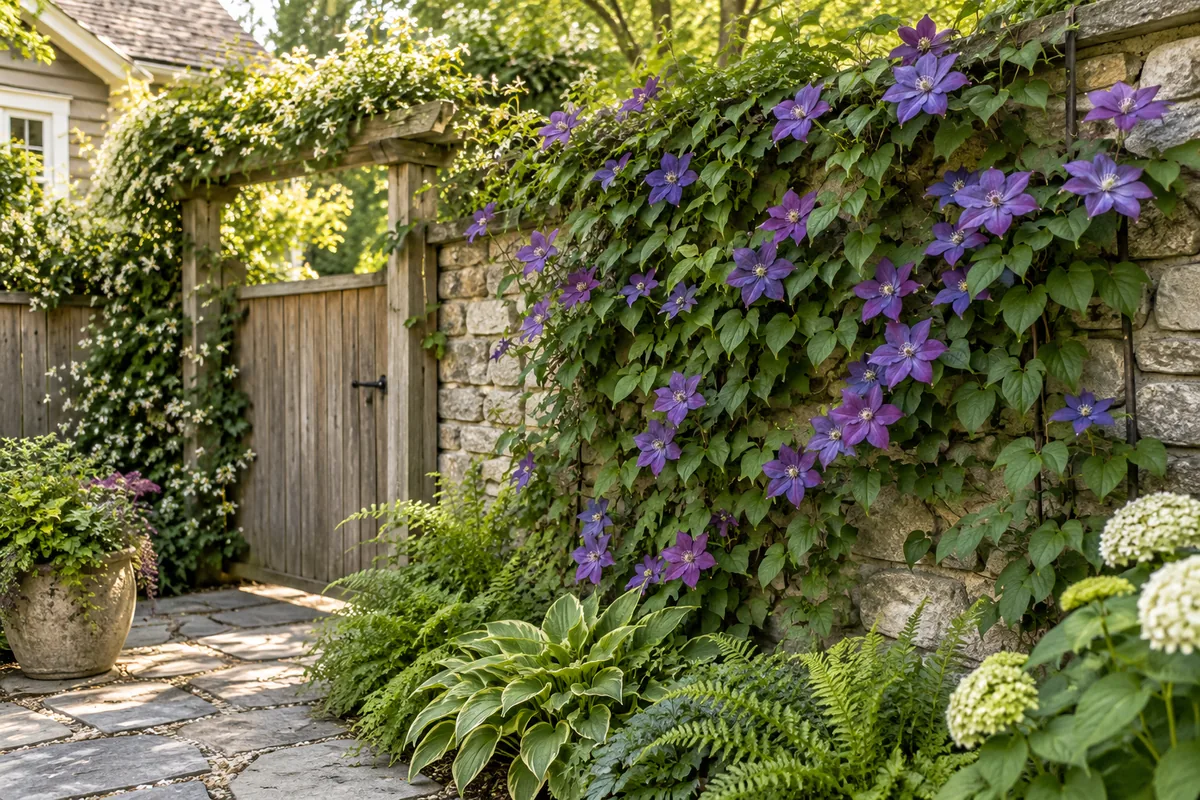
Climbing Vines for Fences and Walls with Suitable Supports
Climbing Vines: Support, Walls, and Local Fit: explore placement, upkeep, and local safety questions before deciding how this feature fits your yard.
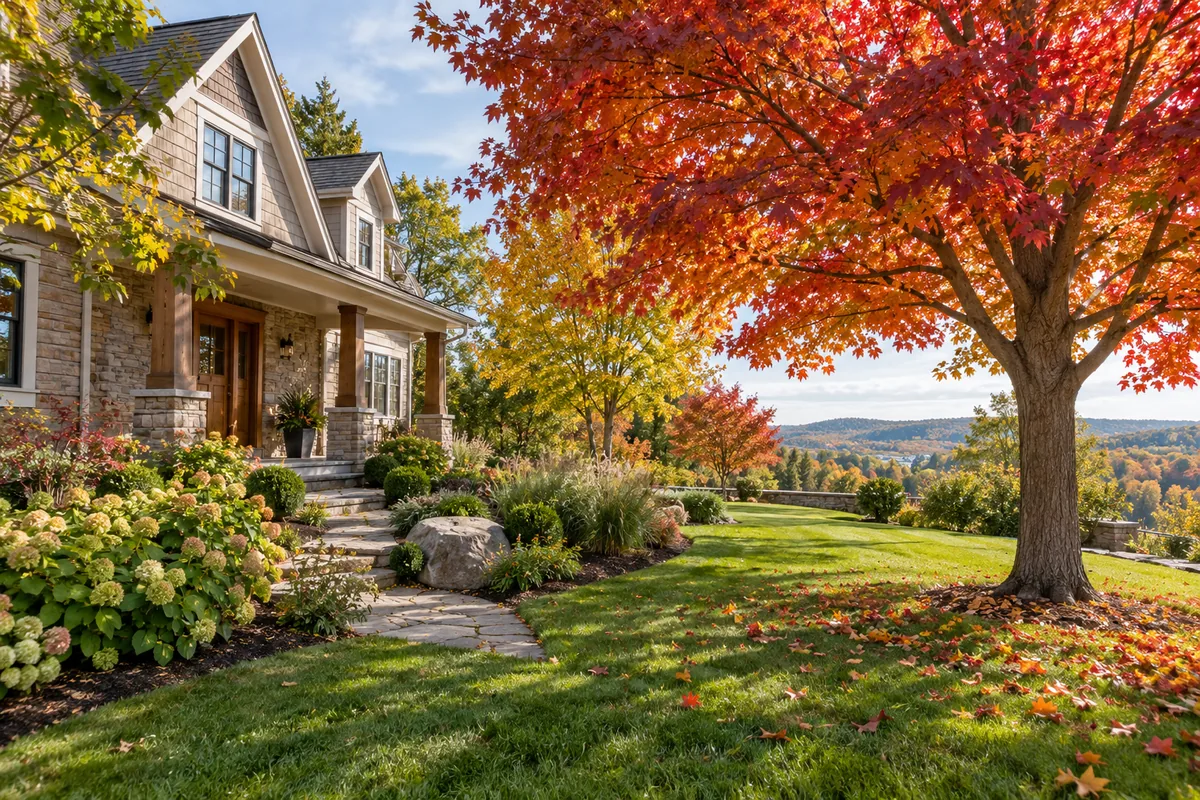
Deciduous Trees for Landscaping and Seasonal Views
Deciduous Trees: Shade, Space, and Local Fit: explore placement, upkeep, and local safety questions before deciding how this feature fits your yard.