
AI Landscape Design 团队撰写 · 编辑方针
Organic mulch vs Rock landscaping: Which Fits Your Yard?
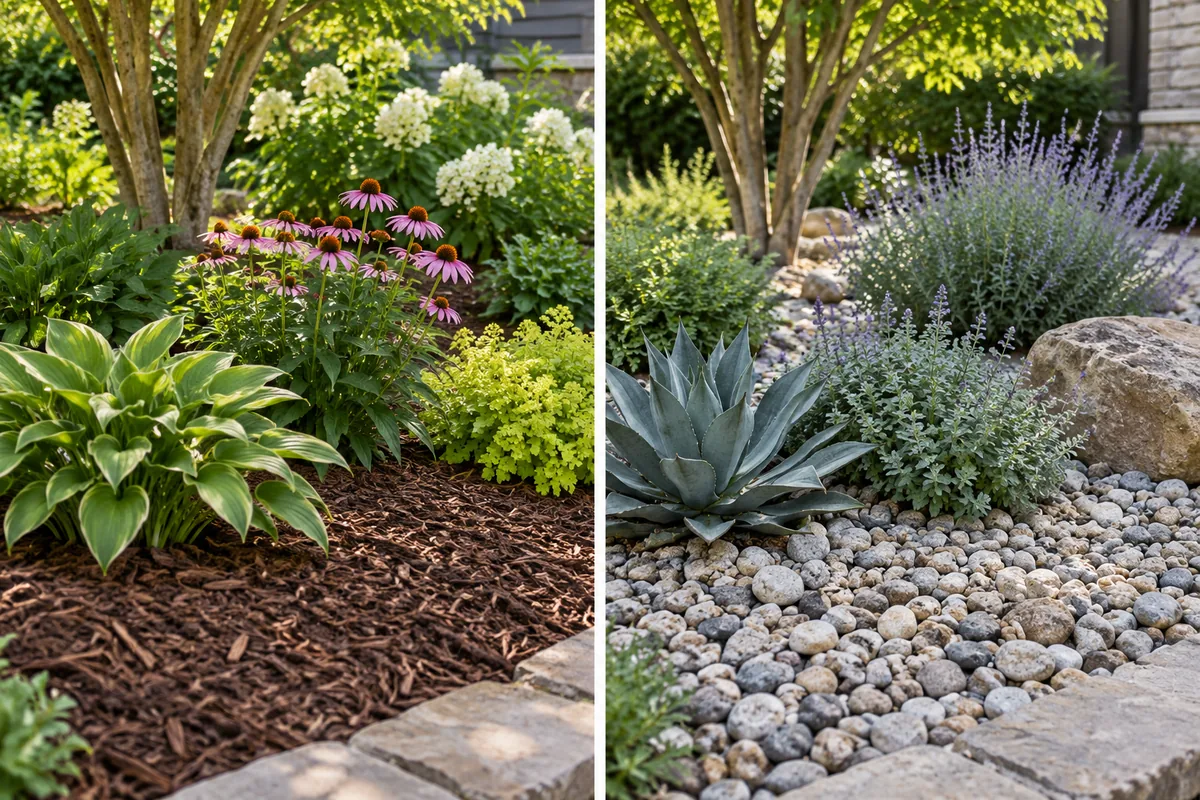
Choose organic mulch when supporting planting-soil care and a replenishable surface suits the bed; choose rock cover when the selected plants, site, maintenance approach, and material character justify a more persistent mineral surface. Rock can itself be a mulch, so the real comparison is organic cover versus mineral cover. Neither choice makes the bed weed-proof or removes local fire and drainage considerations.
发布日期 · 阅读约 6 分钟
要点
- Relative cost: Lower to Moderate; Moderate to Higher.
- Maintenance: Replenishment and weed monitoring; Debris removal redistribution and weeds.
- Lifespan factors: Material breakdown and movement; Containment mixing and site use.
| Dimension | Organic mulch | Rock landscaping |
|---|---|---|
| Relative cost | Lower to Moderate | Moderate to Higher |
| Maintenance | Replenishment and weed monitoring | Debris removal redistribution and weeds |
| Lifespan factors | Material breakdown and movement | Containment mixing and site use |
| DIY difficulty | Moderate with suitable handling | Moderate to Higher with heavy transport |
| Best for | Beds needing appropriate organic cover | Selected stable mineral-cover compositions |
| Soil relationship | Can contribute organic matter | Does not supply organic matter similarly |
| Planting changes | Restore cover after soil access | Move and separate mineral material |
What is the layer meant to do?
A mulch layer is a soil-surface treatment, not a replacement for an appropriate planting environment. Organic cover can include materials such as bark or suitable compost, while mineral cover can include selected gravel or stone. According to the Royal Horticultural Society, mulches can help with water retention, weed suppression, and soil-related benefits depending on the material. Clarify which role matters in the particular bed. A decorative rock field may be useful in one composition but inconvenient in a frequently replanted border. Do not choose a surface solely because it hides soil in a photograph. The existing plants, planned changes, and access for ongoing care should lead the comparison.
How does each relate to soil improvement?
Organic materials can decompose and contribute organic matter, with effects depending on what is used and the conditions. Mineral cover does not contribute organic matter in the same way. That difference does not mean every planting bed should receive the same organic treatment or that every rocky garden is inappropriate. Investigate the soil and plant needs locally, especially where drainage, nutrient balance, or particular habitats matter. Check USDA hardiness zone, light, moisture, and regional invasive status when plant selections change. Avoid general recipes that assume an image identifies the soil. Ask how the desired growing conditions will be maintained beneath the surface rather than using the cover as proof that the bed is healthy.
What should be considered about heat?
Surface color, exposure, material, moisture, and nearby hardscape affect the local conditions around planting. Do not use a simple rule that all stone makes every bed hotter or every organic material keeps it cool. Inspect the actual site during strong sunlight and discuss the selected cover with local horticultural advisers. A dark aggregate beside a south-facing wall may deserve different review from a pale cover beneath established shade. The plant roots and the people using the adjacent route both matter. Avoid unsupported temperature figures and choose appropriate shade or planting arrangements where needed. The heat question should remain connected to the specific material and location, not just the broad category.
Where does weeding remain necessary?
Both types of cover can accumulate seeds and organic debris, so neither should be described as weed-proof. Organic material may need replenishment as it breaks down or moves; mineral cover may require debris removal and redistribution. Ask how the bed will be reached without damaging plants or mixing layers unnecessarily. A rock surface beneath leaf-dropping shrubs can create more cleaning work than expected. Dense planting can make any weeding task harder if access was not planned. Compare a manageable bed edge and an accessible interior before adding another surface layer. A cover is one part of weed management, not evidence that unwanted growth will never return.
How easy is it to change the planting later?
Frequent rearrangement can be more cumbersome where stones need to be moved and kept separate from planting soil. Organic cover can also be disturbed during planting and needs restoration afterward, but the handling task differs. Think about whether the border is experimental or relatively settled. A gardener who likes dividing and moving plants may value easy soil access more than a persistent decorative finish. A stable planting arrangement may justify a carefully selected mineral cover if the site and species support it. Mark where maintenance tools and new plants will enter. The apparent permanence of rock should be weighed against the possibility that plant needs or household preferences will change.
What local safety questions matter?
Fire-related landscape guidance can vary by location and the relationship between planting beds and buildings. Check the applicable local requirements with qualified advisers rather than giving a nationwide recommendation for organic or mineral cover near a house. Neither material should be used to conceal drainage problems or interfere with inspection of structures. For pets and children, review loose stones, sharp material, and the toxicity of nearby plants separately, using the ASPCA list where relevant. If the work involves excavation in the United States, contact 811. Changes affecting drainage or retaining edges should be reviewed by licensed local professionals before the decorative surface is selected.
How do relative costs change over time?
Organic mulch can have a lower initial material cost in some projects, with recurring replenishment and handling to consider. Rock may involve delivery weight, preparation, edge containment, and eventual removal costs. Product selection, area, site access, and local labor can reverse an assumed ranking. Compare equivalent scopes and the actual care routine. A cheap load of material is not the whole project if it is difficult to move to the bed or unsuitable for the planting. Keep cost categories broad and avoid invented monetary estimates. The useful budget question is which approach you can maintain and change responsibly, not whether a persistent surface eliminates every future expense.
How should visual exploration be used?
Compare the same planting arrangement under different surface treatments rather than allowing one version to gain better plant density or shade. AILandscape can generate photo-based visual concepts, but local review must confirm soil needs, plant suitability, fire guidance, drainage, and installation details. A smooth rock surface in an image does not show what happens after leaves fall or plants are divided. Bring those maintenance scenarios into the discussion. Choose organic or mineral cover for a clear purpose and accept its handling requirements. A bed that supports the actual plants and remains accessible for care is more valuable than a decorative layer selected only to make the ground look finished.
常见问题
Is rock considered mulch?
Yes, mineral materials such as selected gravel can serve as mulch. This comparison uses organic mulch to mean decomposable soil cover and rock landscaping to mean mineral cover. Clarify the actual material and purpose instead of assuming mulch always means bark.
Will either option stop every weed?
No. Seeds and debris can accumulate, and unwanted growth can still need attention. Suitable preparation and care matter, but neither organic nor mineral cover should be sold as weed-proof. Plan access for ongoing inspection and removal.
Should rock always replace organic mulch near a house?
Do not apply a nationwide rule. Local fire guidance, building relationships, planting needs, and site conditions must be reviewed by the appropriate qualified advisers. A material choice should follow that assessment rather than an assumption based on a general landscaping image.
参考来源
相关阅读
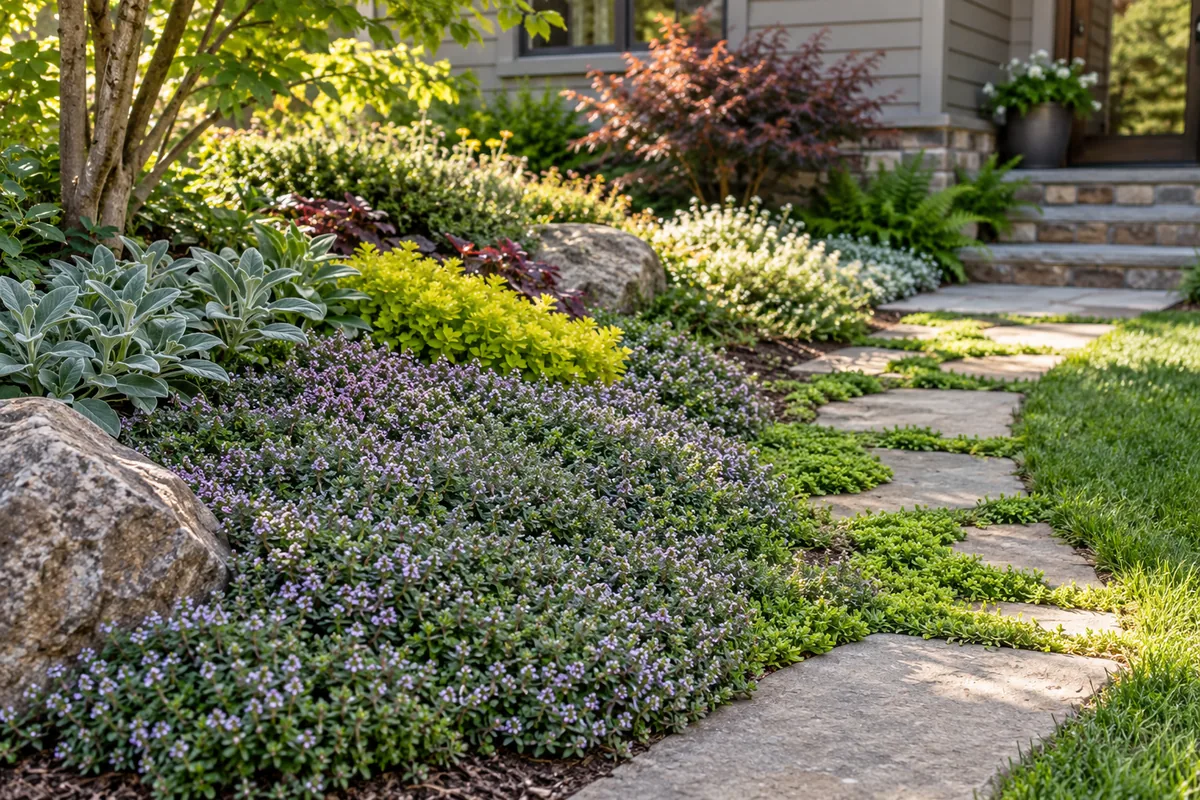
Ground Cover Plants for Borders and Deliberate Lawn Alternatives
Learn how ground cover plants fit your yard, with practical material, placement, upkeep, and safety questions to review before choosing a visual direction.
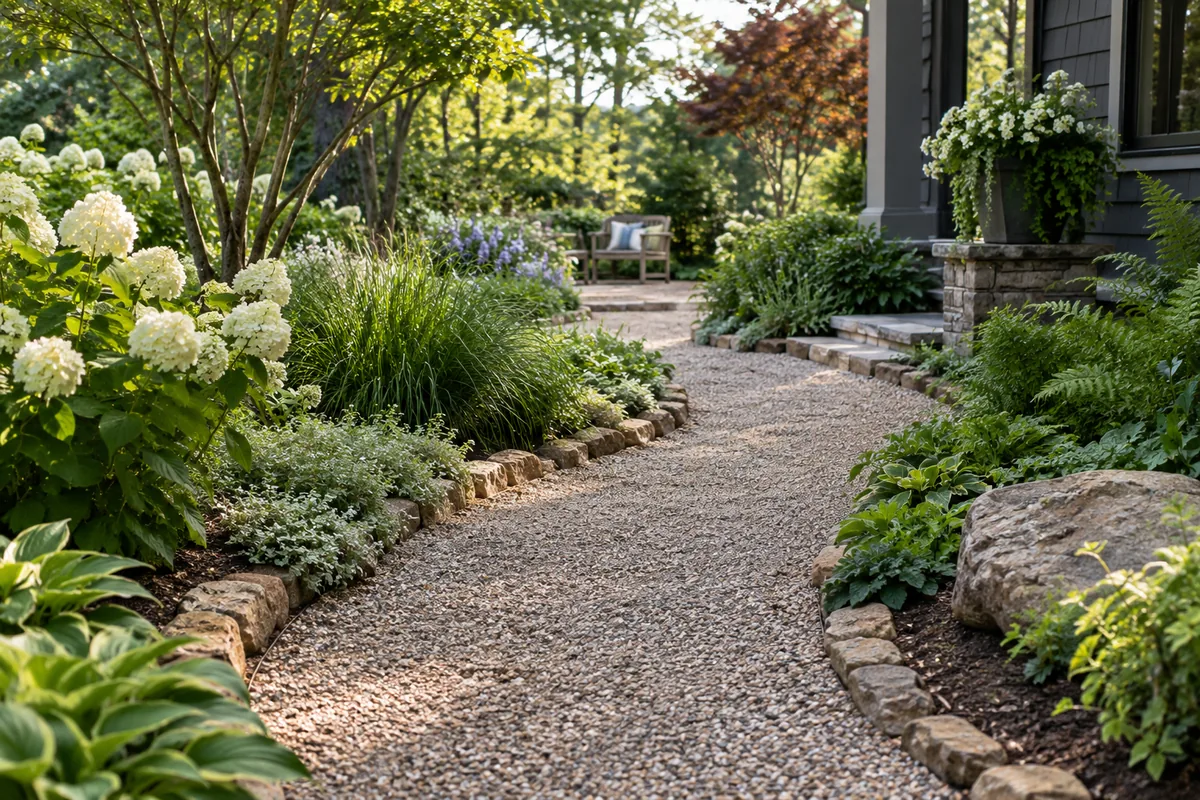
Gravel Paths That Fit Real Garden Movement
Learn how gravel path ideas fit your yard, with practical material, placement, upkeep, and safety questions to review before choosing a visual direction.
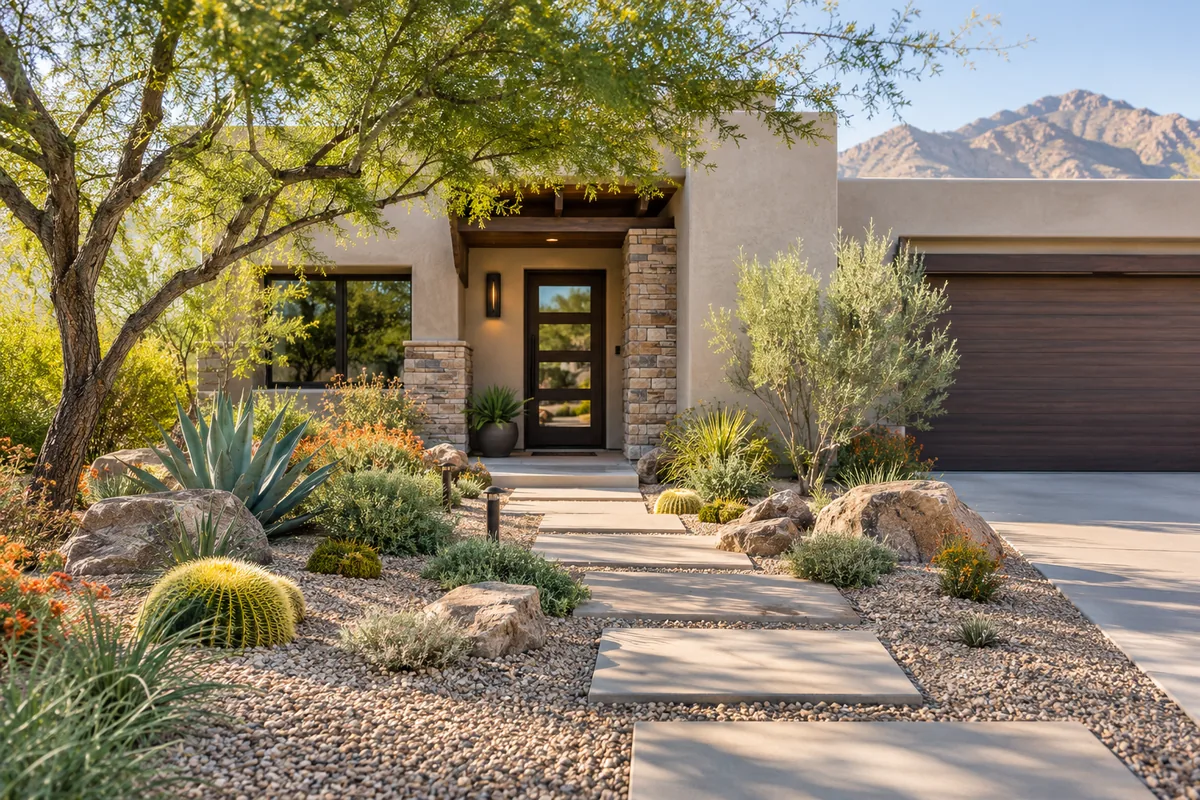
Desert front yard ideas for a comfortable, readable arrival
Explore desert front yard ideas with useful shade, sculptural plants, mineral surfaces, visible addresses, and safe access beside driveways and doors.
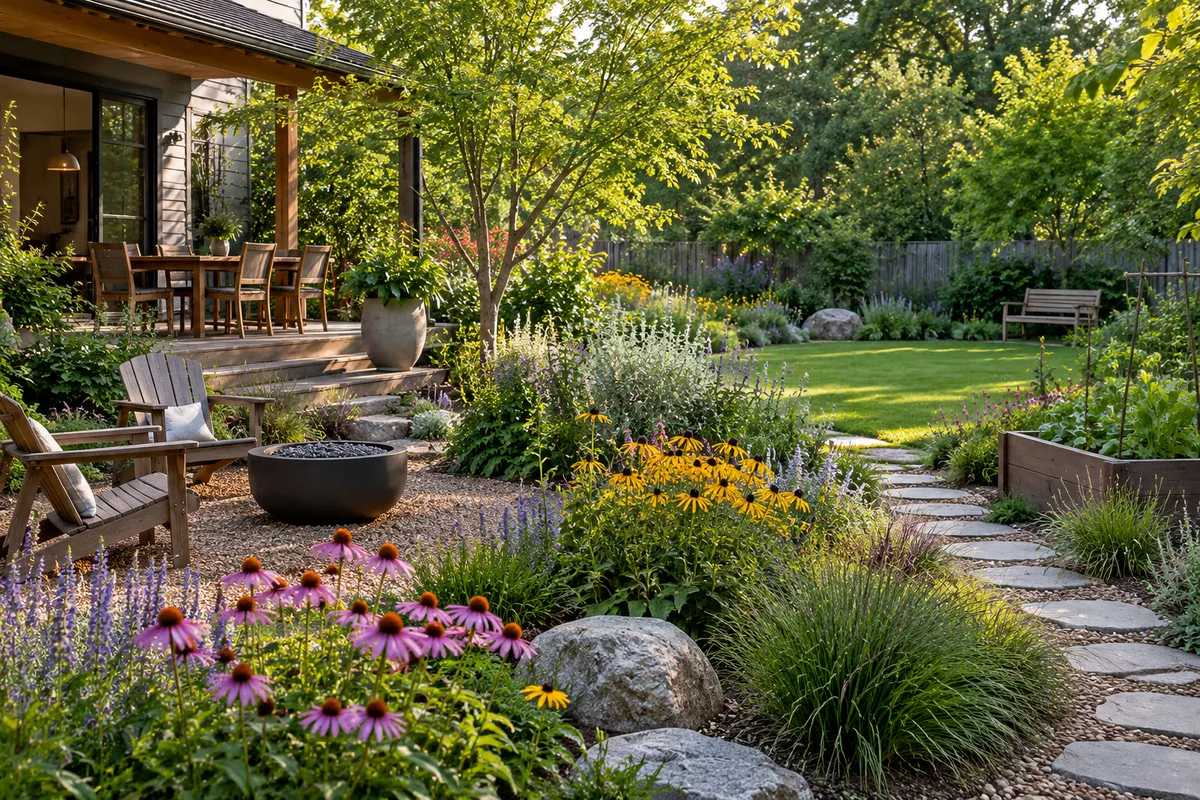
Native backyard ideas for seasonal planting and daily life
Find native backyard ideas for regional plant groups, seasonal texture, clear activity areas, useful access, and locally verified choices around the house.
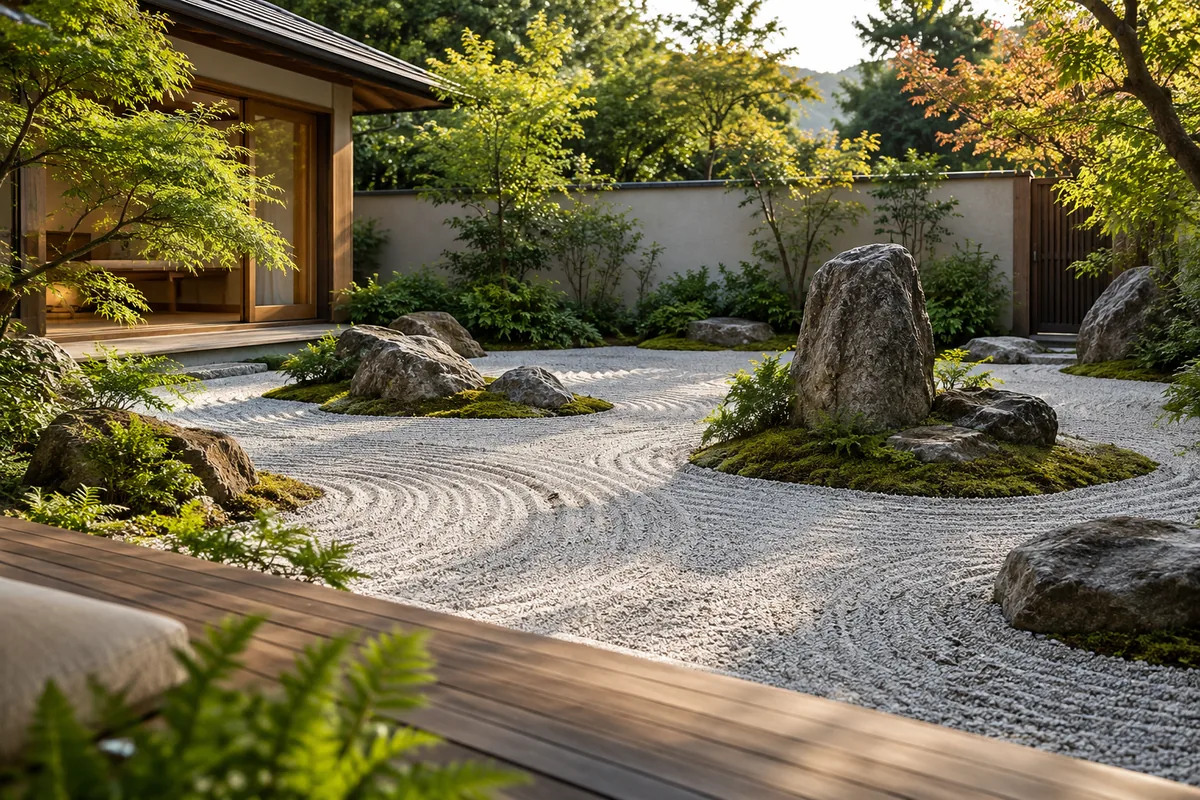
Zen garden style: stones, gravel, and deliberate space
Learn how zen garden style uses composed stones, raked gravel, restrained planting, and a chosen viewpoint, with practical limits for residential gardens.
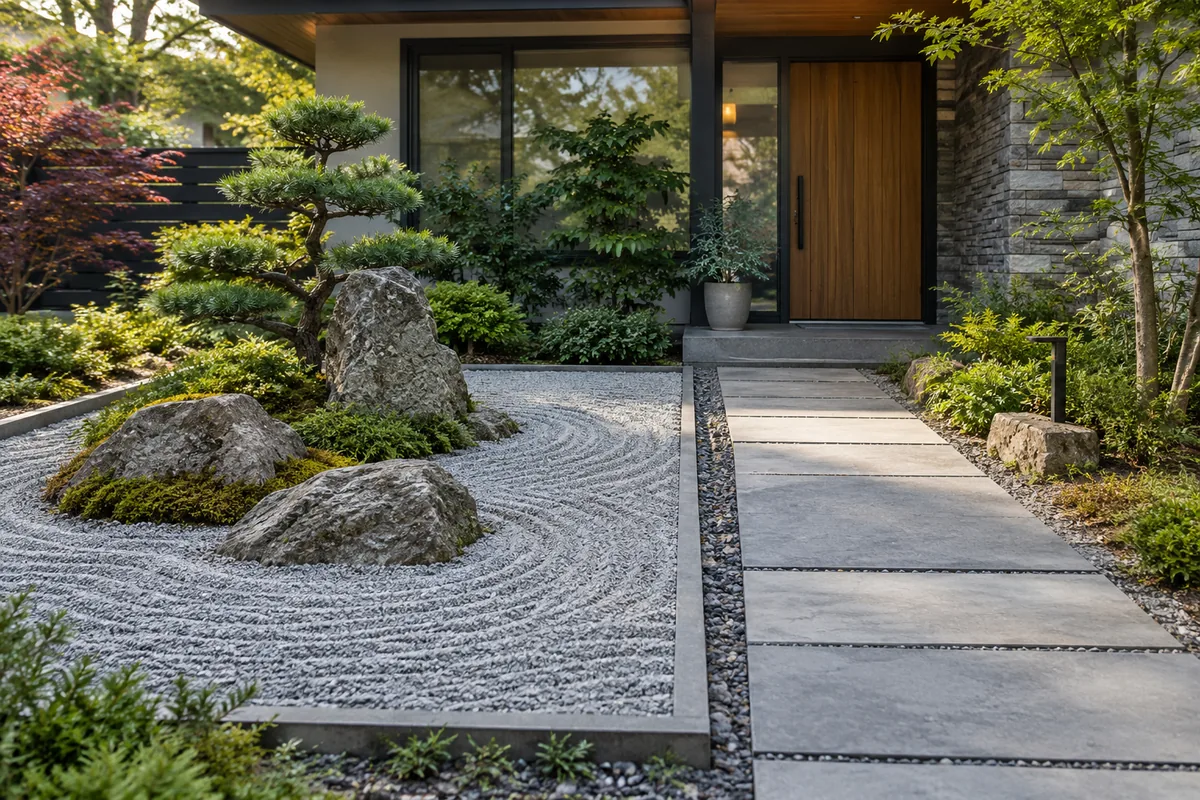
Zen front yard ideas: a quiet view beside a usable entrance
Explore zen front yard ideas using a composed stone view, restrained gravel, simple planting, and clear arrival routes beside a usable entrance.